Right, so the business model for online casinos is human dealers, innit. Woman sitting in front of a camera in a studio somewhere, dealing cards or spinning a roulette wheel while people watch through a live feed. That's the product. That's what punters pay for.
Now there's this push to replace her with an algorithm.
I worked the odds for thirty-five years. Saw every scam in the book. The human dealer was always the weakness. Collusion with players, fatigue causing sloppy dealing, corruption, all of it possible. But the human dealer was also the strength. People trust humans more than machines, on balance. The dealer's hands are visible. The shuffle is visible. You can believe the thing is honest because there's someone there doing it.
An AI dealer removes the human element. That's sold as a feature. It is. It removes human error, removes the possibility of corruption. It also removes the trust mechanism.
The Technical Side
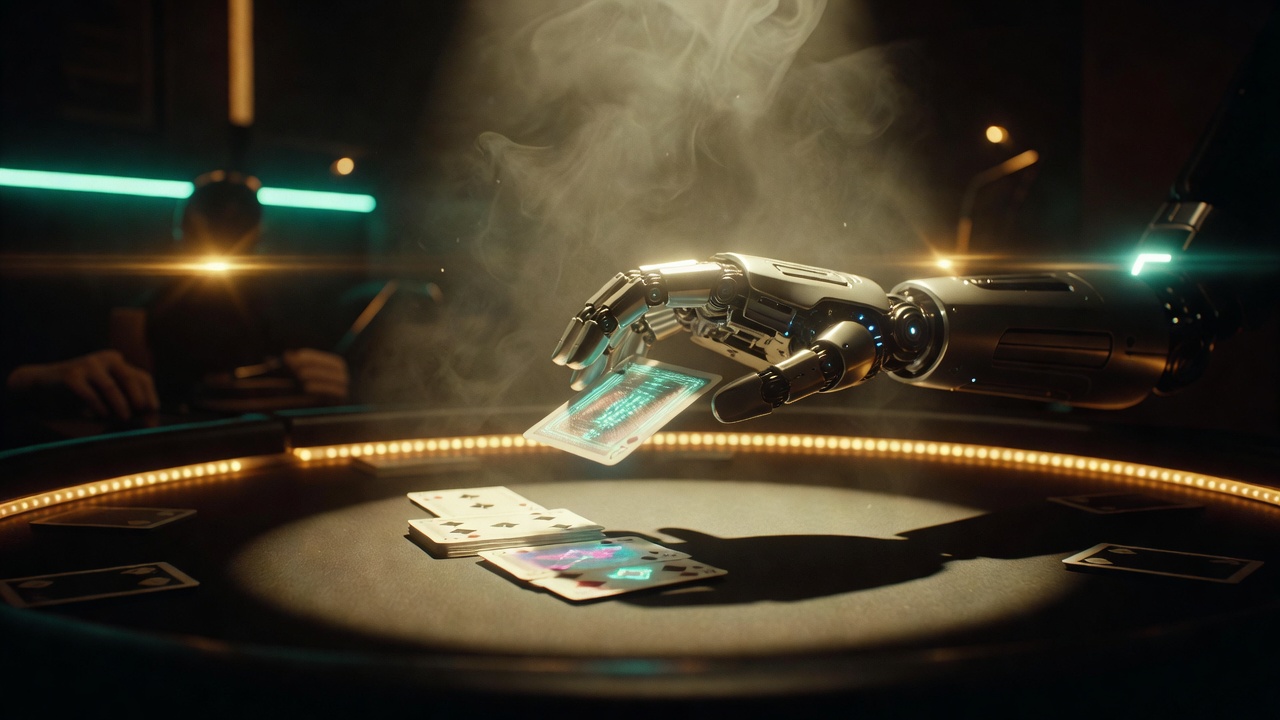
An AI dealer would theoretically shuffle digitally, generate the card sequence using a random number generator, and present it through an animation. The mathematics would be provably fair if done right. The shuffle would be more random than any human shuffle. The speed would be faster. The availability would be 24/7.
On paper, it's better. Stronger house edge because there's no dealer shift, no downtime. Better consistency because algorithms don't get tired. Better scalability because one algorithm serves infinite tables.
But here's the issue. A punter walks up to an online table, and instead of seeing a woman dealing, they see a computer animation. The psychological effect is immediate. This is not a game anymore, it's a simulation of a game. The difference matters more than the business would like to admit.
Why Players Actually Care
The appeal of live dealer casinos is that they're live. The dealer is a person. She can smile. She can chat. She can remember your face if you play regularly. An algorithm cannot do these things. It should not try.
A punter playing against a computer dealer does not believe the game is real. They believe, rationally or not, that the algorithm is designed to take their money in ways that are mathematically justified but nonetheless rigged. This is not paranoia. It's exactly what the casino would be doing if they built the AI dealer to maximize their edge.
Deal the same game through a human dealer with the same RTP and the same house edge, and the punter feels like they're in a real game. The probability of them believing the outcome is fair goes up significantly.
The online gambling space is already fighting perception issues. Americans think it's all fraud. Brits have gotten wise to house edge. Europeans understand math but trust regulation. An AI dealer adds to the perception problem.
The Market Reality
Every major operator has tested AI dealers to some degree. Most have shelved it. The players don't want it. The punters explicitly choose tables with human dealers over identical tables with algorithmic dealers, even when the house edge is identical.
I've seen the numbers. At DraftKings, at FanDuel, at the big European books, human dealers get traffic. AI dealers get abandoned. Players would rather lose money to a woman's face on a screen than to perfect mathematics in a void.
There might be a niche market for AI dealers. Budget-conscious punters who care only about odds, not atmosphere. That niche is smaller than the operators would like.
The old saying in the business is: "The house doesn't need to cheat. The math is already on their side." An AI dealer proves this point technically. It proves the point so clearly that punters don't trust it. The business shoots itself in the foot.
If AI dealers are coming, they're coming slow. The market's voting with its money, and the money's saying no.