The Reality of In-Play
You're watching a match on a Wednesday night. The second half kicks off. Your sportsbook app is open and waiting. You've got 10 seconds of visual advantage before the odds move. The platform you chose either handles that window or it collapses under its own weight.
In-play is the difference between a platform built for volume and one built for actual people watching games.
Speed Matters More Than You Think
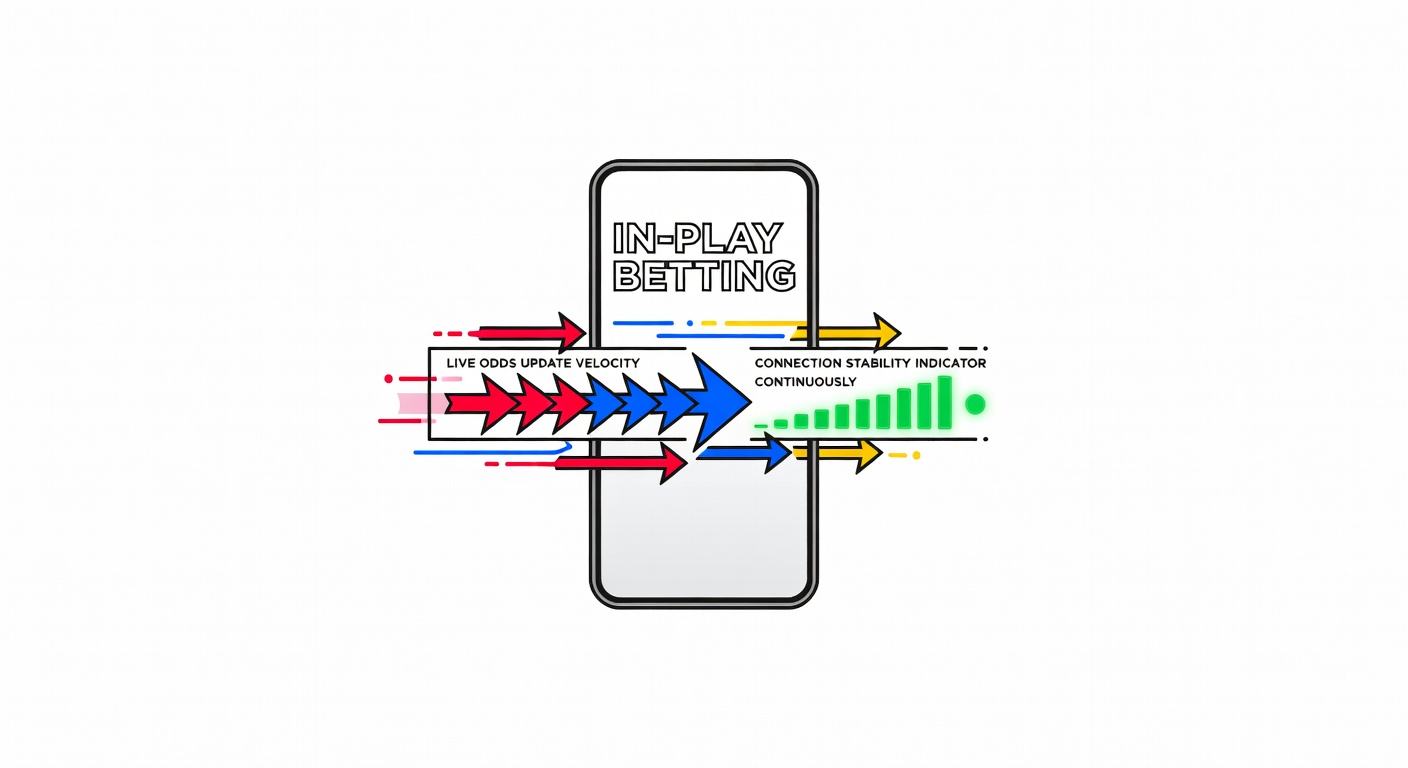
A delay of 200 milliseconds is the difference between you getting the line you wanted and getting locked out. Most bettors don't realize how tight this window is. The oddsmakers are adjusting in real time. The sharps are moving before the casual money hits. Your app needs to acknowledge your bet, process it, and confirm it before the market moves.
DraftKings built their in-play experience around this constraint. They process bets in under 500 milliseconds on 4G. That's not a luxury. That's the baseline for staying in the game.
Stake has done the same, but their architecture is different. They're built on blockchain infrastructure that refreshes odds every 3 seconds. It's slower than traditional betting, but the trade-off is transparency.
Connection Reliability Is Non-Negotiable
You're sitting in a stadium. Fifty thousand people. Everyone is on their phones. Your wifi is shared bandwidth. Your cellular is congested. A platform that works in your living room might choke in that environment.
Bet365 handles this by maintaining multiple data centers and routing around congestion. If you're on cellular, they're pulling from the tower nearest to you. If you're on wifi, they're doing device-level packet optimization.
This isn't marketing. This is infrastructure that costs money to build and maintain.
The UI Has to Be Invisible
You need to see the match, the odds, and the slip in one glance. In-play means your screen real estate is contested. The app is fighting for your attention. The oddsmakers are fighting for your decision. The match is happening in real time.
The best in-play experiences move the match to the top half of the screen and the betting slip to the bottom. Your thumb can reach the slip without covering the action. Your eyes can track the game while confirming the bet.
DraftKings accomplishes this. Stake accomplishes this. DraftKings started with that design from day one. Stake had to rebuild their interface in 2021 to get there.
Latency Compounds Across the Network
Your phone talks to your sportsbook. Your sportsbook talks to its odds provider. The odds provider talks to its traders. A 100ms delay at any point in that chain means the odds you see are already old.
The sharper platforms integrate directly with the odds stream. They're not polling for updates every 500ms. They're pushing odds to your device in real time using WebSocket connections. That changes the game mathematically.
If you're betting at a place that polls for odds, you're always betting on yesterday's market.
Practical Moves
First: test the platform before game day. Open a match that's not your money. Place a test bet. Watch how long the confirmation takes. If it's over 2 seconds, find another platform.
Second: understand your network. If you're always at stadiums, cellular latency matters more than anyone admits. Test both cellular and wifi before committing to a platform.
Third: know your limits. In-play betting is fast betting. Fast betting favors the house. The odds you see are priced for volume, not accuracy. The best sharps in the world use in-play as a tool for specific situations, not as a lifestyle.
The platform doesn't matter if you're chasing. The platform matters if you've already decided what the line should be.