It was Tuesday. I remember because Tuesdays are slow at the crypto casinos. Everyone is either still dreaming about the weekend action or already thinking about the weekend coming. The middle days are quiet.
I get a call from a player I know. Goes by Marcus but that is not his name. He lost everything. 40 bitcoin. Roughly 1.6 million dollars at that time. Gone.
I meet him at a coffee place near his apartment. He looks like someone just pulled the foundation out from under his life. Which, technically, someone did.
Here is what happened.
The Hot Wallet
Marcus kept his bitcoin on an exchange. Kraken, Binance, one of those. The idea made sense to him. It was liquid. He could trade whenever he wanted. When he got a feeling about a hand or a number, he could move money onto a casino site in minutes.
This is what people mean by a hot wallet. Connected to the internet. Ready to move. Quick.
The exchange had email notifications. Two-factor authentication. All the standard safety measures. Marcus thought he was protected.
Then someone, somewhere, got his password. Maybe he used the same password on some other site that got breached. Maybe he clicked a link that looked real. Maybe someone called him pretending to be customer service and he gave them information he should have kept to himself.
The point is his password was known.
The Hack
They disabled the two-factor authentication. They changed the password. They sent all his bitcoin out to an address Marcus has never seen. Forty bitcoin. A ledger. Complete.
Marcus is sitting across from me at this coffee place and he is telling me this and his hands are shaking. Not from anger. From the particular kind of shock that comes from watching money you earned disappear in the time it takes to drink a cup of coffee.
Cold Storage
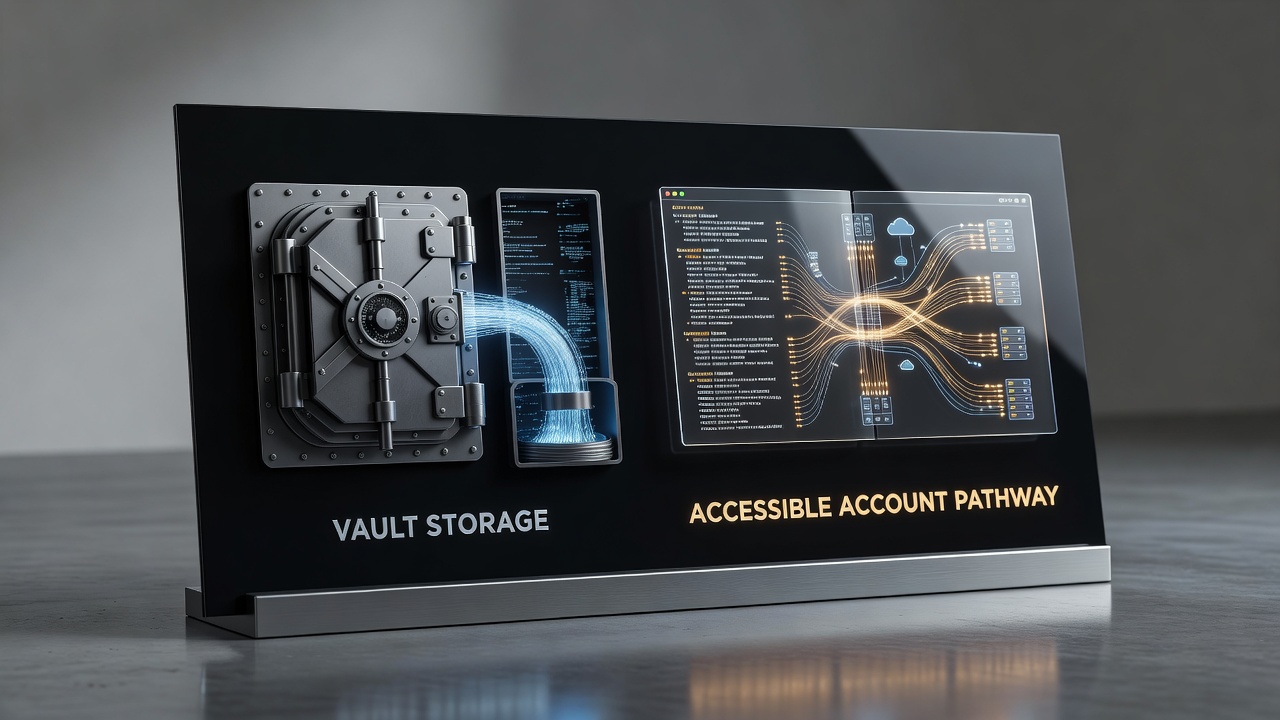
He had heard the term before. Cold storage. Offline. A hardware wallet. A Ledger Nano or a Trezor. A device the size of a cigarette lighter that holds private keys away from the internet entirely.
To use the bitcoin, you have to plug the device into a computer, sign the transaction on the device itself, and only then can it move. There is no remote hack that can get around that. No phishing email. No password that exists on an internet-connected server.
Yes, someone could steal the device itself. But Marcus is not famous. No one is going to steal a hardware wallet from his safety deposit box.
The Rebuild
After the coffee meeting, Marcus decides to do something that most people would not do. He does not quit. He does not walk away thinking crypto gambling is rigged. He sets up a new system.
He starts over with 2 bitcoin from savings. He buys a Ledger Nano X. He does not keep it on his desk. He puts it in a safety deposit box at a bank. When he wants to play, he takes the device to the bank, withdraws it, makes his transaction at home, and returns it that same day.
It takes an extra twenty minutes.
It kept his money from disappearing a second time.
The Math
The difference between a hot wallet and cold storage is the difference between having your house password locked or having your house on an island only you can reach. One is convenient. One is safe.
For a small amount of bitcoin, the convenience of the hot wallet might make sense. For a bankroll, for real money, there is no choice.
A hardware wallet costs somewhere between 50 and 150 dollars. A safety deposit box costs 20 to 40 dollars a year. Insurance costs nothing.
What you pay for is the guarantee that your money will still be there when you decide to risk it.
Years later, Marcus is still gambling with crypto. He has rebuilt most of his losses. He has never had his cold storage compromised. The ledger device sits in the bank like a small, plastic guarantee.
Every Tuesday, he goes to play. Every Tuesday, he first goes to the bank.