I have worked baccarat tables in Macau for seventeen years. I have seen men bet their houses on the squeeze of a card. I have learned to read the smallest signals. The widening of pupils. The change in breathing. The hesitation before the commission is paid.
Dragon Tiger is not baccarat. It is simpler. Some players find that offensive.
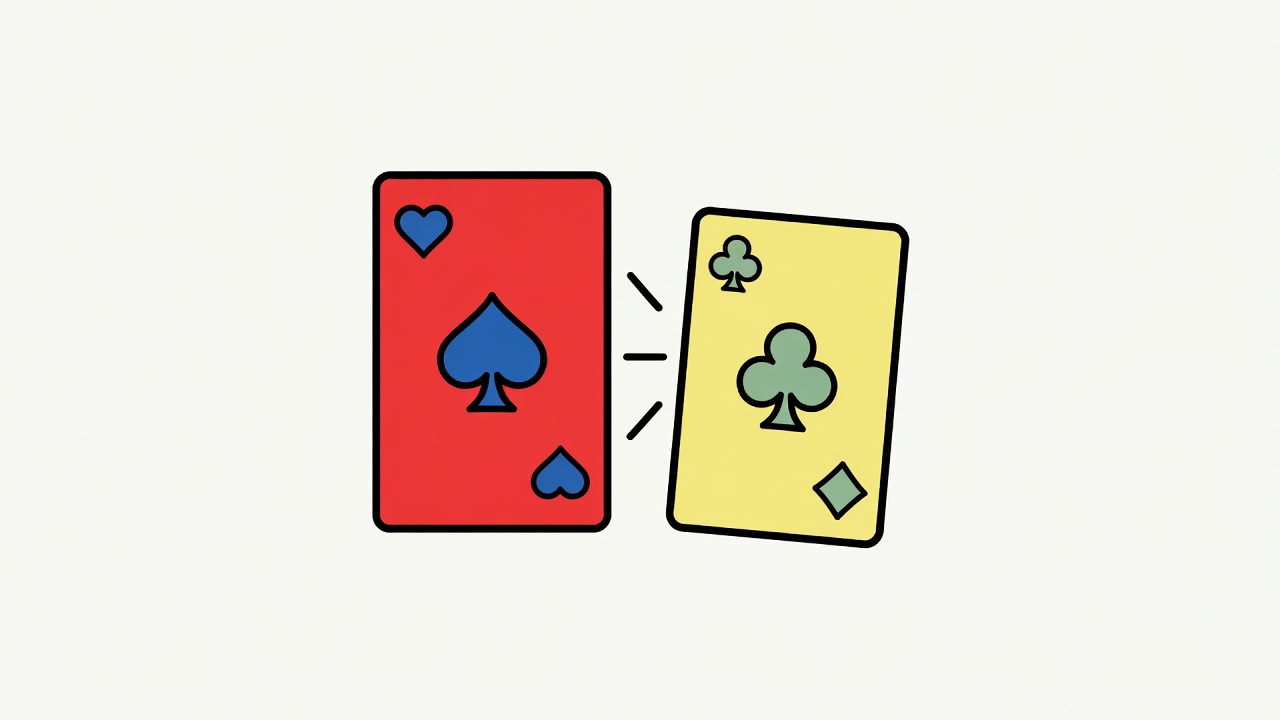
The game moves like this: the player sits. The dealer (myself, or another) places one card face down in the Dragon position, one in the Tiger position. The players wager on which will be higher. Ace is low, King is high. The suit means nothing. Once all bets are closed, I turn the Dragon card, then the Tiger card. Whoever holds the higher card wins. That is the entire game.
There is no third card. No drawing rules. No house edge in basic strategy because there is no strategy. You guess right or you guess wrong. You wager on Dragon, Tiger, or a tie. The tie pays eight-to-one. Everything else pays one-to-one, minus a small commission if the house has a stake.
The Appeal for High-Limit Players
Why do serious players come to Dragon Tiger? Not for the mathematics. The game has no mathematical advantage to exploit. You cannot count cards. You cannot shift the odds through technique. The volatility is extreme. A single hand reverses everything.
They come for the speed. A baccarat shoe might yield forty hands in an hour. Dragon Tiger yields two hundred. For a player sitting with five hundred thousand in chips, the velocity is intoxicating. The decisions compress. The rhythm accelerates.
They come for the theater of the card. In baccarat, the squeeze is controlled. Both hands know they will see the card eventually. The tension is performance. In Dragon Tiger, there is only one card per hand. The moment of revelation is shorter, sharper. I have watched whales' faces when the Dragon card shows an Ace and the Tiger shows a King. The disappointment is concentrated.
They come because they can wager enormous sums on a single hand with minimal house edge. The banker's advantage in baccarat is thin but persistent. In Dragon Tiger, if you are betting Dragon, your odds are nearly fifty-fifty. For someone with millions to move, that flatness has a certain honesty.
The Ritual
What makes a high-limit table function is not the rules; it is the choreography. The way a card is placed. The pause before the turn. The announcement of the winner. I have worked with dealers who could not explain the basic strategy of poker but who could hold a room's attention through perfect rhythm.
At a Dragon Tiger table, I place the Dragon card to my left. Tiger to my right. Both face down. I tap them against the felt twice. This has no mechanical purpose. It has psychological purpose. The sound is confirmation. The game is real. The money is at risk.
The players do not watch my hands. They watch the cards. They watch for the corners to lift, for any leak of information. They watch the suit, though it cannot matter. They watch hoping to glean a signal from the way I breathe.
I give them nothing. I am a conduit. The cards speak.
The Mathematics Nobody Mentions
The house edge on Dragon and Tiger bets is about 1.46 percent if the commission is 4 percent. This is worse than baccarat. This is worse than blackjack. This is worse than European roulette. And yet, high-limit players choose it. Why?
Because edge is not destiny. Edge compounds over thousands of hands. At a high-limit table where a single hand might represent six months of a regular player's gambling, mathematics becomes academic. What matters is variance. What matters is the shape of the outcome.
Dragon Tiger offers what people actually want: a binary bet resolved instantly. No complexity. No secondary decisions. A moment of absolute clarity: you were right or wrong.
I have learned that gambling is not rational, and operators who pretend otherwise are missing the actual business. People do not come to win money. They come to want something, briefly. Dragon Tiger delivers that wanting in the shortest possible time.
That efficiency is why the game exists.