Back in 1975, the Flamingo had maybe six pit bosses on a busy Friday night. They would stand at the edge of the tables and watch. Their job was to make sure no one was stealing chips, no dealer was being careless with the house money, and no player was doing anything that looked even remotely like card counting.
They missed things. People were human. Even the good ones got tired.
Now there is optical character recognition. OCR. A system so fast and thorough that it makes those old pit bosses look like they were doing accounting with stones.
The Setup
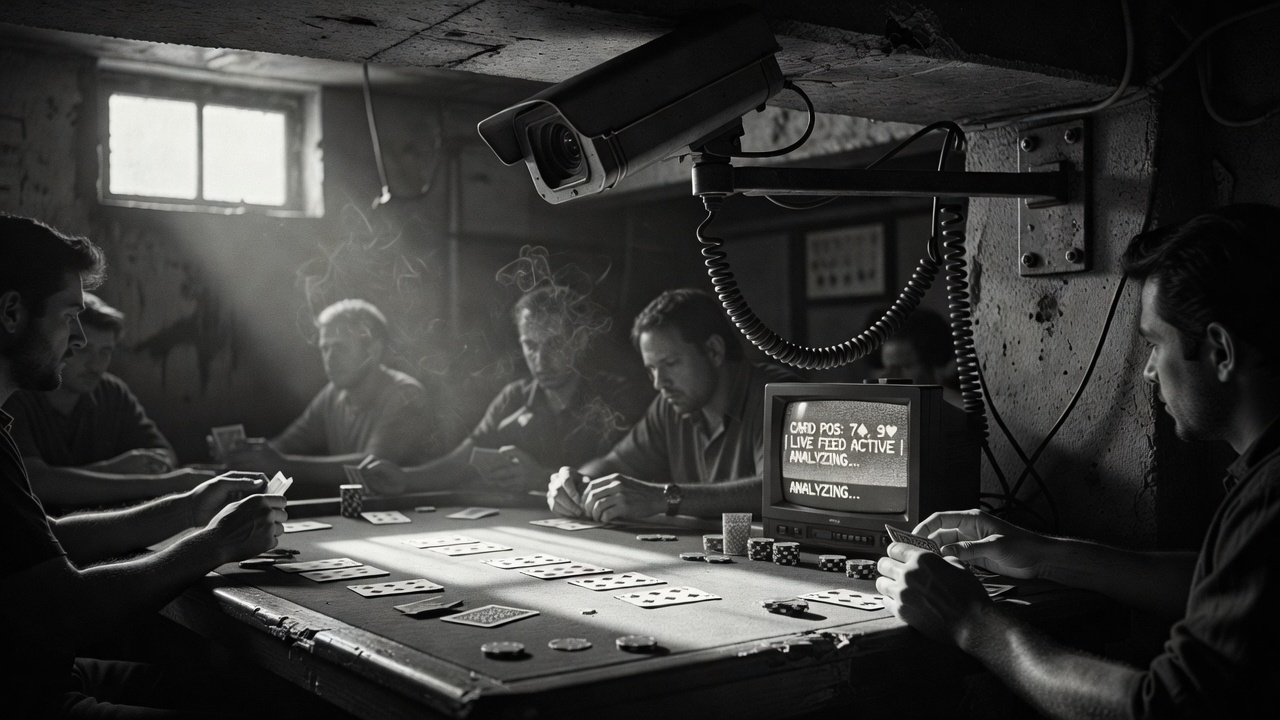
When you sit down at a live dealer table now, there are cameras everywhere. Under the table. Above the table. On the sides. The dealer is used to it. The players barely notice. What they do not see is that every card is being read in real time by software.
The dealer spreads the shoe. The OCR system reads the cards the instant they are visible. Each card is logged. Each hand is recorded. The system does this thousands of times a day.
In blackjack, the OCR system knows the exact composition of the remaining cards in the shoe after every hand. Automatically. Instantly.
Why This Matters
From a regulatory standpoint, OCR is the reason live dealer games are trustworthy in a way that old-time table games could never be. Every hand is recorded. Not just by camera, which could be faked or misread, but by a machine that cannot be bribed, cannot be tired, cannot be confused by sleight of hand.
The UKGC, the Malta Gaming Authority, the Curacao regulators, they all demand OCR or equivalent for live dealer games. They are not worried about player cheating anymore. The deals are too honest. They are worried about operator cheating, and OCR makes that nearly impossible.
The Technology
The system has to read cards from multiple angles at different speeds. A dealer spreading a shoe moves fast. The OCR has to capture thousands of micro-images and stitch them together into a readable sequence. The math is actually neat.
The system learns to read the wear patterns on older card decks. It learns the slight differences in printing between card manufacturers. Pragmatic Play's live casino uses a different OCR stack than Evolution Gaming uses, and the systems are proprietary.
The error rate is less than one card per 100,000 hands.
The Consequence
This means that cheating the dealer is more or less impossible now. Not difficult. Impossible. The players know this. The dealers know this. The regulators know this.
For operators, this solved a problem that existed from the beginning of live dealer gaming. Trust. The players had to trust that the cards were being dealt fairly. Now the trust is not necessary. The cards are logged. The game is transparent to whoever is watching from the back office.
The History
Evolution Gaming introduced the first live dealer casinos in 2006. They used high-definition cameras and human eye-in-the-sky supervision. By 2010, they started implementing OCR. By 2015, it was mandatory on all their tables. Other providers followed. By 2020, a live dealer game without OCR was basically not licensed anywhere.
In Las Vegas, the casinos still use human pit bosses. They have not switched to full OCR. The work is familiar. The oversight is working. They update slowly here.
But online, OCR is now as standard as a felt table. It is one of the reasons live dealer gaming has grown so fast in the last decade. The players trust it more. The regulators approve it. The liability for the operator drops dramatically.
I watched an old-school pit boss use an OCR readout once. He was fascinated and skeptical. He said it was like watching someone count every grain of sand on a beach. Pointless, but in this case, necessary.
He was not wrong.