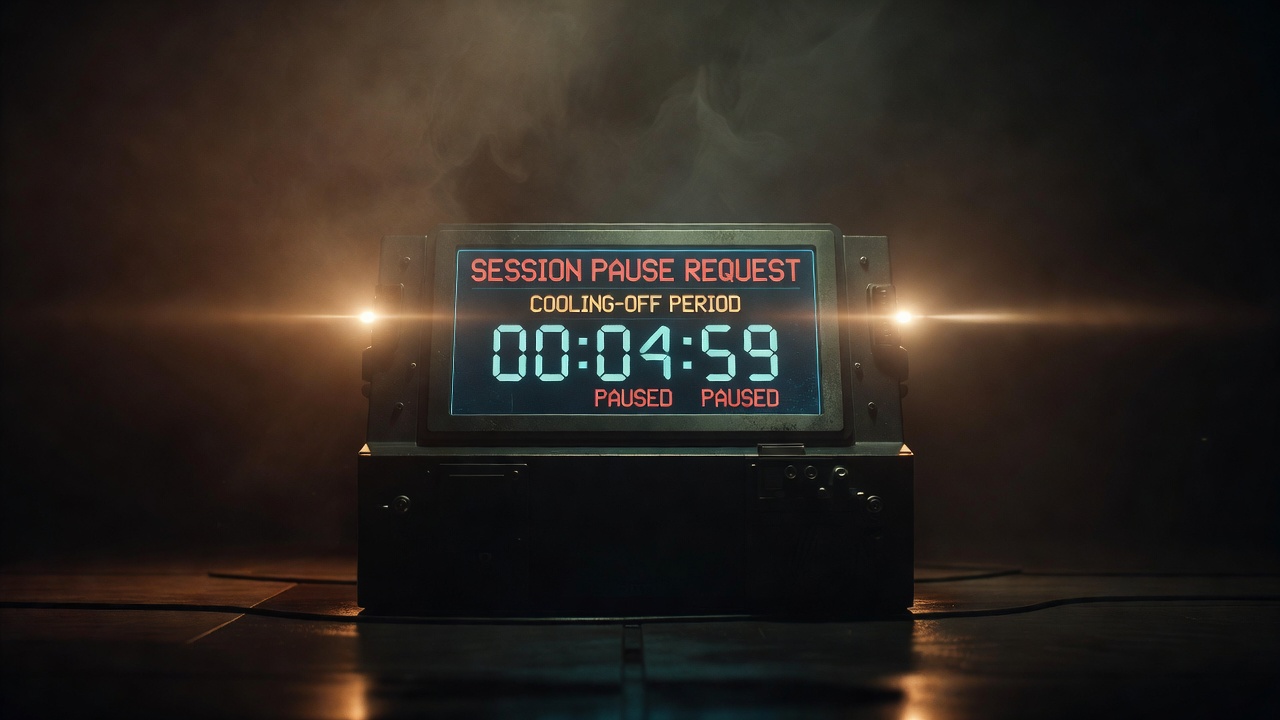
A time-out feature, in the regulatory context, is a mandatory suspension of account access imposed at the player's request or the operator's discretion. This feature operates within the framework established by the UK Gambling Commission, the Malta Gaming Authority, and similar regulators across licensed jurisdictions.
The terminology is precise. A time-out is distinct from self-exclusion. A time-out is temporary; self-exclusion is permanent or semi-permanent. A time-out is typically activated by the player themselves; self-exclusion may be initiated by either player or operator. The mechanics and legal frameworks are accordingly different.
Regulatory Obligations
Operators licensed in the United Kingdom are required by the UKGC to offer time-out functionality as of April 2020. The requirement specifies that players must be able to set a time-out period of at minimum 24 hours. Operators may offer longer periods: 48 hours, 7 days, 30 days, or longer.
During the time-out period, the operator shall not contact the player regarding promotions, bonuses, or inducements to play. The account remains suspended. No deposits may be added. No withdrawals may be made in most jurisdictions, although some permit withdrawal during timeout if funds were deposited before activation.
The Malta Gaming Authority similarly requires time-out functionality. The Curaçao eGaming regulator requires only that operators "should" offer time-out mechanisms.
Operational Implementation
The time-out is implemented through account management systems. A player logs in and selects "Set Time-Out" from account settings. The player specifies the duration: 24 hours, 48 hours, 7 days, 30 days, or the operator's maximum offering.
Once activated, the system adds the duration to the current timestamp. When the player attempts to log in before the timeout expires, the account is locked. A message informs the player of the expiration date.
Some operators implement automated email reminders at the midpoint of the timeout period, offering information on responsible gambling resources. This is operator discretion, not regulatory requirement.
Distinction from Self-Exclusion
Self-exclusion is a far more restrictive mechanism. A self-exclusion typically lasts 6 months to permanently. Once initiated, the player cannot revoke it (with limited exceptions for permanent self-exclusions, which are genuinely irreversible).
A time-out, by contrast, automatically lifts when the period expires. The player does not need to take action to reactivate their account.
For players who recognize a problematic pattern but do not believe it constitutes full-blown problem gambling, time-out provides an intermediate tool.
Effectiveness as Intervention
Research from the UK Gambling Commission indicates that time-out features result in a 20-35 percent reduction in problem gambling severity among players who use them. The cooling-off period creates a behavioral interrupt.
The mechanism of effectiveness is disruption of habit loops. If a player typically gambles at 9 PM, and activates a 48-hour time-out, the habit loop is interrupted for two days. Habits are weakened by interruption, particularly if the interruption exceeds 24-48 hours.
The effectiveness is substantially higher when the timeout duration exceeds 48 hours. Seven-day timeouts show 40-50 percent reduction in gambling severity. This suggests that the mere interruption of the daily cycle is insufficient; the brain requires time to shift focus entirely away from gambling behavior.
Limitations and Criticisms
Time-out does not prevent a player from using another operator. A player timed out at Operator A may simply move to Operator B. In jurisdictions without cross-operator self-exclusion registries, this represents a significant gap.
Second, time-out is player-initiated in most cases. A player in the midst of problem gambling may not recognize the problem acutely enough to request a time-out. Some operators have implemented loss-triggered automatic timeouts (if a player loses X amount in Y days, a mandatory timeout activates), but these are uncommon.
Third, time-out has a fixed endpoint. After 7 days, the player may feel ready to resume play, even if the underlying problem remains unresolved.
Cross-Operator Coordination
Some jurisdictions have begun implementing registries where a time-out or self-exclusion at one operator is visible to other operators in the same jurisdiction. The UK has BeGambleAware. Spain has integrated its registry across multiple licensed operators.
These cross-operator systems strengthen the tool considerably. They prevent the simple movement to another operator as a workaround.
Practical Guidance
For operators, time-out represents a regulatory minimum compliance requirement. For players, time-out is a useful tool for interrupting problematic behavior without committing to self-exclusion. The optimal use case is the player who recognizes a pattern developing and wants to interrupt it before escalation.
Players who have not yet recognized a pattern, or who are in deep problem gambling, require stronger mechanisms: self-exclusion, or multi-operator registries that prevent simple migration to another provider.