Report No. 177
Standard Deviation in Roulette: The Math Behind Swings
You play roulette for three hours and walk away up $500. Or down $3000. Same game, same rules. Standard deviation explains why volatility is the game's real weapon.

The brief
You're at the roulette table. First 10 spins, you're up $400. Next 20 rotations, you're down $1200. Same wheel. Same odds. This is not luck talking. This is standard deviation, and it's the closest thing roulette has to a personality.
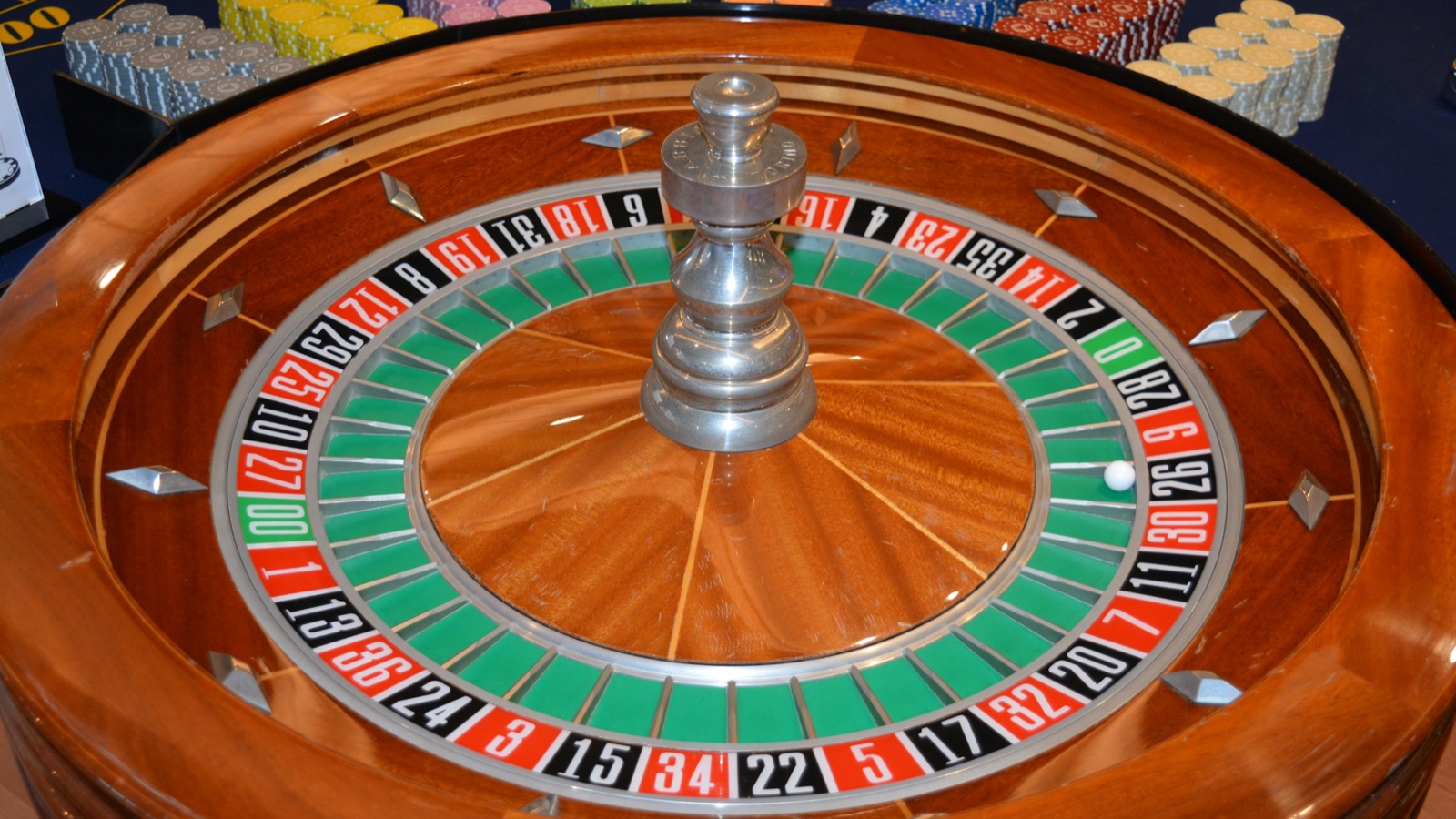
Standard deviation is the measure of how far your actual results can swing away from the mathematical expectation. In roulette, the expected value is grim: you're losing 2.7% of your stake per spin on a European wheel (37 numbers) or 5.26% on an American wheel (38 numbers including 00). But nobody loses exactly 2.7% per rotation. You lose $100, then win $150, then lose $50 again. The path you take toward that mathematical grave is what standard deviation quantifies.
The Swings Are Real
Let's say you wager $10 per spin. European roulette. Expected loss per rotation is roughly $0.27. Seems minuscule. But your actual results vary wildly. You could land red four times running and be up $40. You could see black for six consecutive turns and be down $120 with just six bets placed. Standard deviation tells you the range where you're likely to land.
For roulette, the standard deviation per rotation is approximately equal to your bet amount. Wager $10, standard deviation hovers around $9-10 per spin. This means that in a sample of 100 turns, the normal range of outcomes (one standard deviation, covering about 68% of all feasible results) is roughly $900 to $1100 of fluctuation on either side of the expected loss. That's massive relative to the tiny 2.7% mathematical edge.
Why This Impacts You
You walk into a casino with $2000. You're wagering $20 per rotation. You play 100 spins. Mathematically, you're losing about $54 (2.7% of your total action). But actual outcomes? You could easily be ahead $300 or behind $400. Both are ordinary occurrences. Both should shock nobody who understands variance.
This is why people lose more than they expect at roulette. The standard deviation is so large relative to the actual edge that the short-term fluctuations feel like they matter more than the long-term mathematics. You play 50 turns, you're up $200, you think you're winning. The equations say you're in the normal variance band for a $20 gambler. Play another 200 rotations and the expectation starts pulling you down. But by then you might have quit, thinking you were hot.
The Dangerous Component
"I was up $500 in the first hour. Then something changed. It felt like the wheel turned against me. I kept wagering to recover my losses and lost everything."
That's a player describing standard deviation without naming it explicitly. What altered wasn't the wheel. The wheel has the same 37 or 38 numbers it always did. What changed was the sample size. In 50 spins, you can be up $500. In 500 turns, that lead evaporates. The longer you play, the more certain you become that you're losing. That's not pessimism. That's mathematics.
Standard deviation is also why "protection systems" sound attractive but don't function properly. You can use a martingale approach (double your stake after each loss to recover losses), a flat-bet method, a positive progression (increase wagers after wins). The math doesn't care. Standard deviation remains indifferent to your bet selection approach. Volatility stays identical. The house edge persists. You're simply organizing your losses differently.
Reading the Figures
For European roulette with $25 bets:
- Expected loss per rotation: $0.68
- Standard deviation per turn: approximately $24.50
- After 100 spins, you could easily be down $2450 or up $1850
- After 1000 rotations, the uncertainty band shrinks percentage-wise, but absolute currency is still enormous
The first number indicates your trajectory (toward the house). The second number shows the amplitude of noise you encounter on the way.
The Streak Phenomenon
You see red come in four times. Your instinct says black is due. That's called the gambler's fallacy, and it's completely independent from standard deviation. Red's odds never change. But standard deviation tells you that runs are absolutely ordinary. In a series of 100 coin flips, you'll observe extensions of 6-7 heads or tails consecutively. That's not probability breaking down. That's variance executing its function.
The Exit Tactic
If you're going to play roulette, standard deviation teaches you something practical: brief sessions feel random because they genuinely are. You're essentially operating in the variance zone, not the mathematical expectation zone. The longer you engage, the firmer the house edge's grip becomes. This means if you're ahead materially in the first 30 minutes, that's the moment to leave. You're ahead of the equations and riding high on volatility. Play another three hours and the variance will probably reverse against you.
Standard deviation doesn't alter the odds. It doesn't render roulette beatable. But it explains why the experience feels like something other than a 2.7% apparatus. The explanation is volatility. That's genuine. That's the swings you feel. Play long enough and the mathematics reclaim all that swinging.