Overview
June 26th, 2012. The Big One for One Drop. One million dollar buy-in. Fifty-one players enter. The winner takes all the money except for the million committed to One Drop, a charity focused on clean water in developing nations. The math alone is insane: 50 million dollars in the middle of the table. The winner walks with roughly 18.3 million dollars before taxes.
Antonio Esfandiari was the heavy favorite coming in, but not overwhelmingly. Phil Ivey was there. Sammy Farha was there. Dan Bilzerian. Doyle Brunson. Gus Hansen. These are grinders with a combined 300 million dollars in recorded lifetime tournament earnings. Esfandiari had won a few major titles but nothing that screamed inevitability.
He played patient, ruthless poker for fourteen hours. The early tables saw him accumulate chips carefully, avoiding the glamorous all-in moments that television wanted. He knew that at one million buy-in, one bad decision destroys you. The blinds would climb. The table would thin. Patience became currency.
At the final table, six players remained. Esfandiari was chip leader. The table included Farha, Bilzerian, and businessman David Einhorn, who was playing in his first major tournament. Einhorn had already committed fifteen million dollars to the tournament before this event. He could afford mistakes. Esfandiari could not.
The final hand moved quickly. Esfandiari held King-Jack of hearts in late position. Farha held King-Queen of clubs on the button. The blinds were 600,000 and 1.2 million dollars. Esfandiari raised to 3.2 million. Farha reraised all-in. Esfandiari called immediately, which at a major tournament means confidence or desperation. Television commentators noted the speed of the call. No hesitation. Esfandiari was either strongly ahead or had made a calculated decision that his image allowed him to get away with a marginal hand.
The flop came Jack-Jack-two, giving Esfandiari a set. Farha was drawing dead. The turn and river ran out. Esfandiari stood, slightly raising his hands as if saying "I know this is surreal." Farha did not stand. He sat for three seconds, then left the table.
When Esfandiari walked to the rail, the crowd reaction was muted. This was not a World Series event with thousands of people screaming. This was invitation-only, one million entry, the world's richest poker tournament. The crowd was other wealthy people. Their congratulations came as nods and private handshakes, not roaring applause.
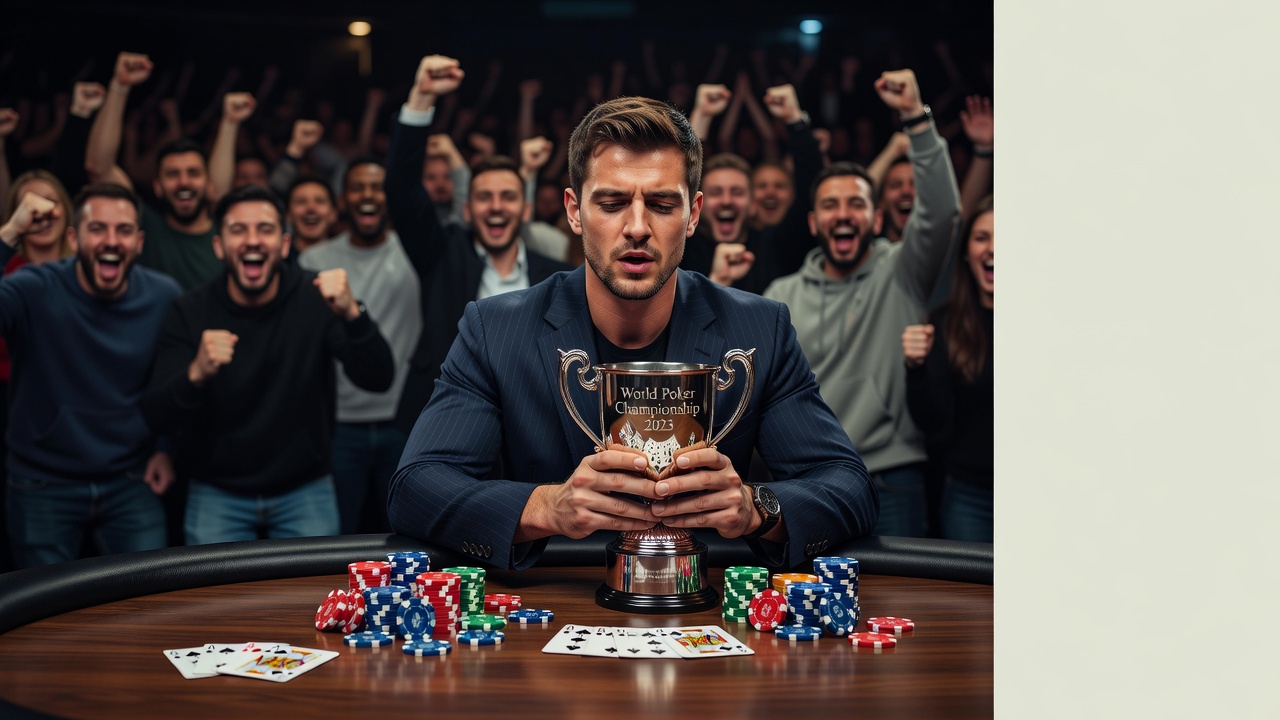
What struck observers was Esfandiari's expression. He was not visibly exhilarated. He was calm. Meditative. He had won 18.3 million dollars and his face registered the same emotion as someone who had made a correctly predicted chess move. This is what professional poker does to facial expressions; the stakes grow so large that emotion becomes a liability. The champions learn to absorb outcomes without expression.
The tournament structure meant something too. This was not a no-limit cash game where a player can rebuy. This was single-elimination. Play badly once and 18 million dollars goes to someone else. Esfandiari had made exactly the right decisions across fourteen hours against some of the best poker players alive. He had not gotten particularly lucky. He had simply been better, made fewer mistakes, and managed his bankroll at the highest stakes.
After the press conference, Esfandiari gave half his winnings to One Drop. That was contractual. One Drop received 25 million dollars that night from the tournament structure and from Esfandiari's personal gift. The charity later announced plans to bring clean water to 80,000 people in Uganda and Tanzania.
Esfandiari had won larger tournament fields. He had won more tournaments overall. But nothing in poker memory equals the raw dollar amount. Twelve years later, that remained true. The Big One for One Drop never ran again. It was a singular event: the collision of enormous money, elite players, and a format designed to produce a single night of perfect poker. Esfandiari walked into that night, read the table, made his shots, and walked out 18.3 million dollars richer. Nobody does it better, and nobody likely will again.