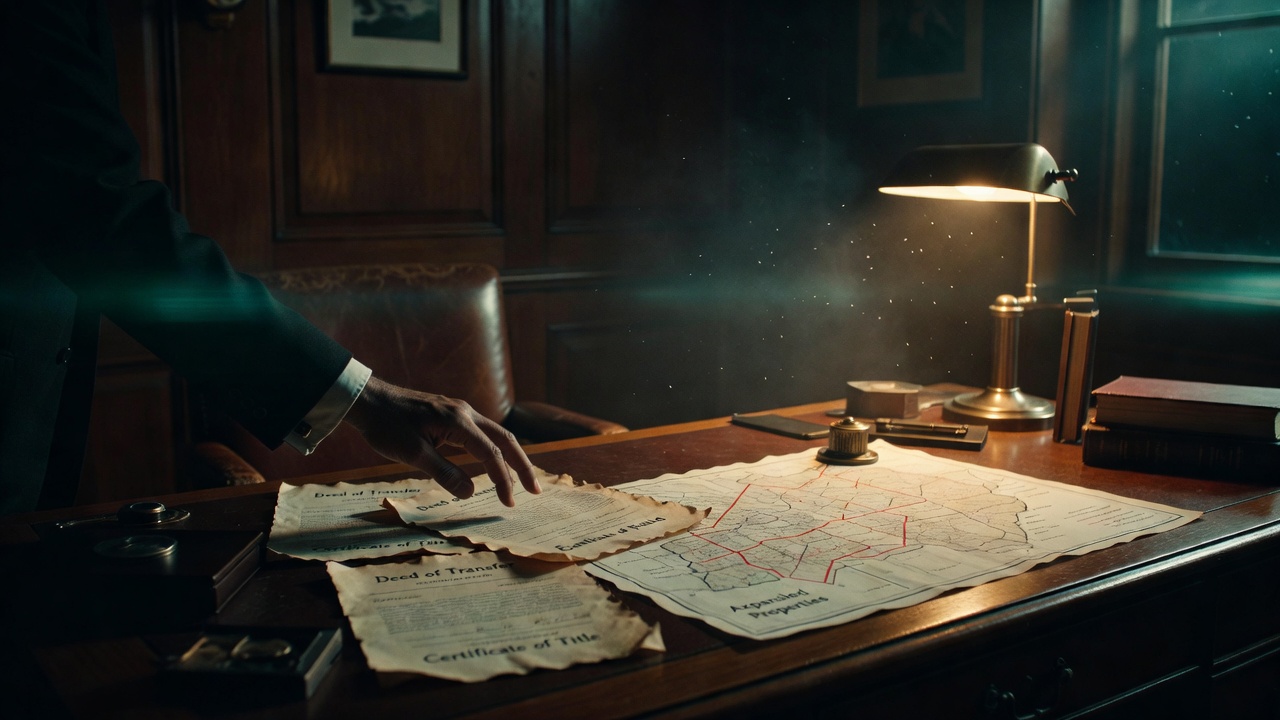
Howard Hughes purchased the Desert Inn in November 1966, and this purchase marked a pivotal moment in Las Vegas history. He paid $13.2 million in cash for the property, an unusual move in an era when most casino operators relied on debt financing. His decision to buy the Desert Inn reflected a specific vision for how gambling establishments should operate.
The Desert Inn in 1966 was struggling financially. The property was not failing catastrophically, but its management faced headwinds from changing tourism patterns. Military traffic to Las Vegas had declined as the Vietnam War progressed. Hughes saw an opportunity where others saw decline.
What Hughes did next revealed his strategic thinking. He purchased the Sands, the Frontier, and the Silver Slipper in subsequent years. By 1968, he controlled five major casinos. His approach differed fundamentally from existing operators. Hughes wanted to reduce gaming space and increase room rates. He commissioned expensive suite expansions. He targeted wealthy individuals rather than mass-market players.
Strategic Decisions and Consequences
Hughes believed high-end hospitality could coexist with gaming. Most casino operators disagreed. Their experience showed that maximizing headcount produced maximum revenue. Hughes thought the opposite: minimize headcount, maximize per-capita spending. This theory was sound in isolation but catastrophic in timing.
Nevada changed its tax policy in 1968. Wall Street capital flooded into the market. Public companies like MGM and Caesars began construction programs. By the time Hughes's properties were optimized, the market had shifted. Competition came from well-capitalized corporations, not individual operators.
Hughes left Las Vegas in 1972 and moved to Nicaragua. His properties reverted to professional management. Under new leadership, the Desert Inn returned to the mass-market model. High-limit rooms were added, but the property became a conventional casino hotel. This transformation highlighted a fundamental truth: casino economics tend to reassert themselves regardless of ownership preferences.
Legacy and Market Timing
Hughes's intervention proved that capital alone cannot override market incentives. The Desert Inn remained the Desert Inn. It employed thousands of people. It generated substantial profit. It simply was not the property Hughes had imagined when he bought it in 1966.
The hotel closed in 2000 after three decades of operation. Hughes's vision had transformed briefly but ultimately could not sustain itself against the pull of conventional casino economics. His attempt to reshape Las Vegas through individual capital was one of the largest-scale failed experiments in American business history. Not because it failed financially, but because it failed conceptually. The market had different ideas about what a casino should be.
The Desert Inn's Physical Legacy
The Desert Inn's original structure opened in 1950. It had 300 rooms and was considered a luxury property. By the time Hughes bought it in 1966, the rooms had dated fixtures but maintained their original size and layout. Hughes's vision for expansion would have added another 300 suites, but the expansion was never completed during his ownership.
The physical casino floor was approximately 45,000 square feet of gaming space. This was large for 1966. Hughes wanted to reduce gaming space and add retail and dining. Operational reality intervened. The property performed better with gaming space expanded, not contracted.
The casino closed in 2000 after 50 years of operation. The building was eventually demolished in 2010. Cosmopolitan Resort now occupies the site. The Cosmopolitan is designed on completely different principles: younger demographic, higher margin, lower headcount. This represents the final victory of the market over the individual vision.