Overview
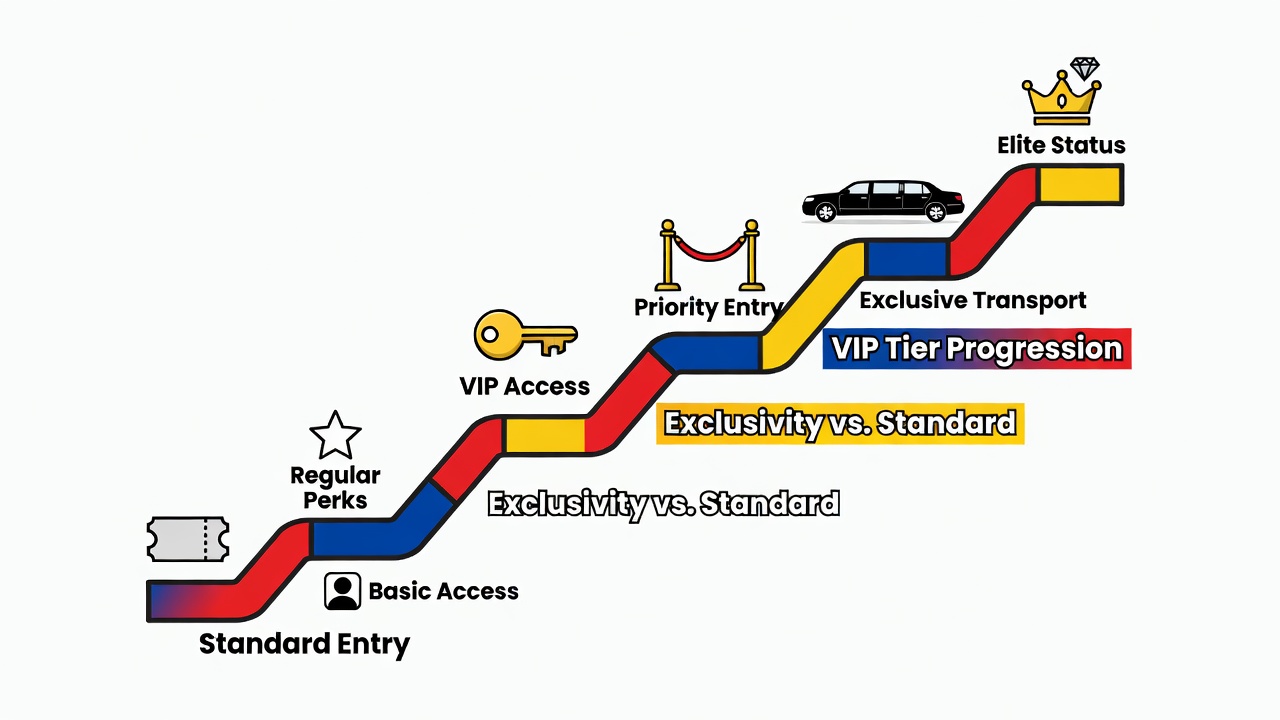
You join a casino's VIP program. You are immediately silver tier. There are six tiers above you. The casino tells you that you are now part of the "exclusive VIP program." This is technically accurate. You are in the program. The exclusivity claim is the non-statement statement. Seventy percent of active players are in some VIP tier.
The reward structure of a VIP program is tier-based. Silver tier offers 5 percent cashback on losses. Gold tier offers 7 percent. Platinum offers 10 percent. The jump from silver to gold might require 50,000 dollars wagered. Platinum might require 250,000 dollars wagered. You climb by losing money and the casino rewards you by refunding a percentage of what you lost.
Note the architecture: the casino makes money on every tier. A silver-tier player wagering 50,000 dollars experiences a house edge of 2 to 3 percent on average. The house keeps 1,000 to 1,500 dollars. The player receives 250 dollars in cashback (5 percent of 5,000 in losses). The net to the casino is 750 to 1,250 dollars.
Consider what tiers do psychologically. A player reaches gold tier and receives a notification: "Congratulations! You have reached gold status." The word status triggers status-seeking behavior. The player now feels they are playing as a gold-tier member. They are invested in maintaining the tier. This is why casinos show you your tier prominently. Every login reminds you of what you are and what you might achieve.
Personalized bonuses appear once a player reaches mid-tier status. A platinum member receives an email: "As a valued platinum member, we're offering you 25 free spins on our new game." The free spins are cheap. The perceived personalization is expensive. The player feels chosen. Eighty thousand players received the same email. But to each player, the email targets them specifically.
Comparison tables reinforce tier psychology. A casino displays what you get at each tier in a table. Tier one gets 2 percent cashback and a birthday bonus of 10 dollars. Tier two gets 5 percent cashback and a birthday bonus of 50 dollars. The visual gap is small. The psychological significance is massive. No player wants to be tier one. Every player wants to climb.
Birthday bonuses in VIP programs are tactical. A player receives a 100 dollar birthday bonus at platinum tier. The bonus is worthless in isolation. But the timing is valuable. A birthday generates emotional signals. The casino times the bonus to land on that signal. The bonus feels like the casino remembered and cared. In reality, the casino automated this in 2008.
Withdrawal accelerators appear at high tiers. A platinum member can withdraw within one business day. A silver member must wait five days. This is not a cost difference to the casino. It is a friction difference. The silver member is annoyed and stays in the account. The platinum member is satisfied and leaves quickly. The friction between tiers creates perceived value for the tier.
Higher tiers unlock account managers. A diamond-tier member gets assigned a personal account manager who contacts them monthly. The account manager asks about their experience, offers special promotions, and provides faster customer service. This is pure psychology. The account manager's job is to make the player feel special. Whether the manager delivers material benefit is irrelevant. The special feeling is the product.
The VIP ladder is designed to be climbed. No player can reach the top tier without playing at volumes that generate significant house profit. A player chasing higher tiers is chasing a reward ladder that ensures the casino profits. The exclusivity is the trap. The tier is the mechanism.