The Setup
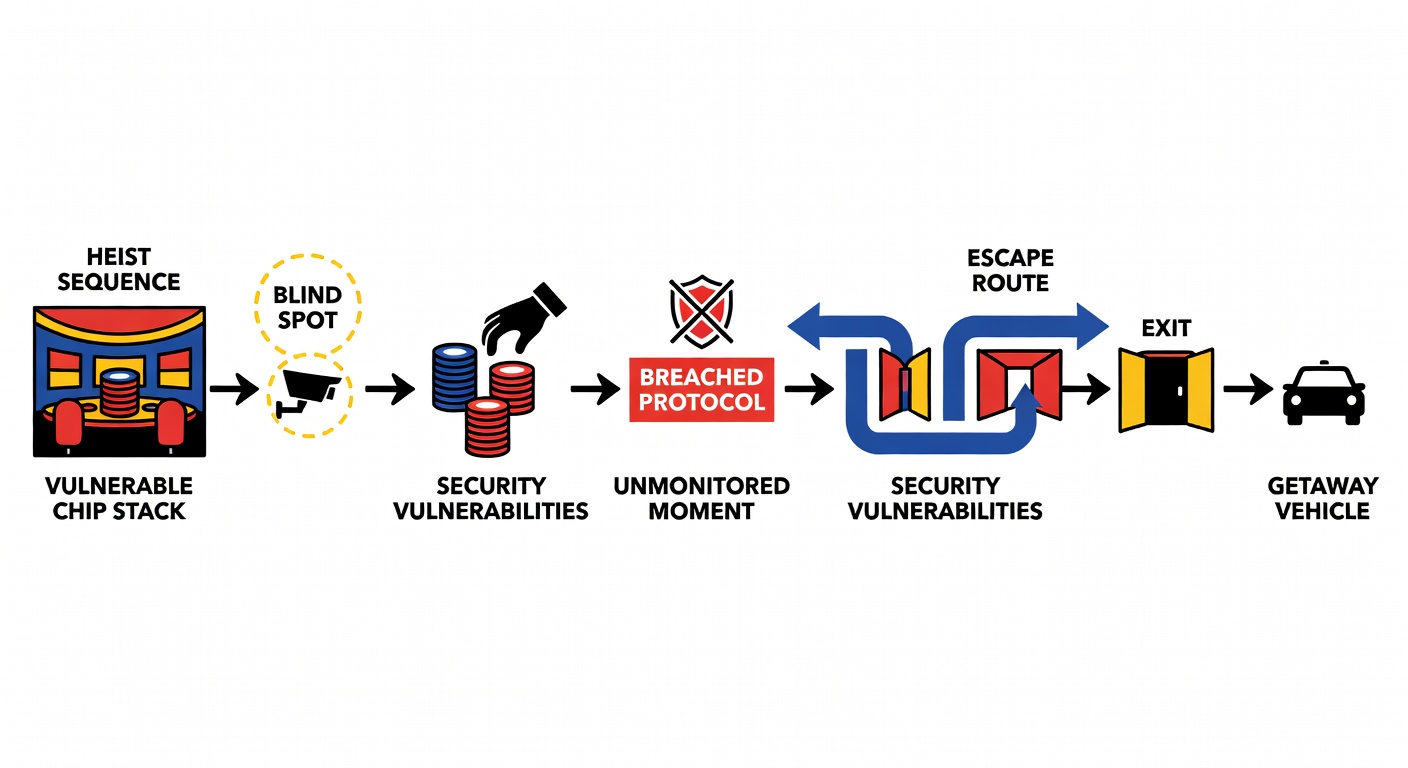
In 2010, Bellagio's high-limit poker room was running. Carleo rolls in on a motorcycle in full biker getup. Claims the goal is $1.5 million in chips. The casino's insurance would cover it. He planned to leave Nevada and disappear into the network.
What people remember: the theft. What they forget: the part where it completely fell apart.
Claim 1: This Was a Sophisticated Heist
Reality check. Carleo rented a motorcycle. He wore a mask. He walked into a casino with more cameras than a television production studio and demanded chips from a cage. Sophisticated would mean he had a buyback waiting, a network of people converting chips elsewhere, an escape plan that survived the first 24 hours. Instead he had a motorcycle and panic.
Why this myth persists: heists are narratively satisfying. A guy on a bike stealing from a casino plays as Ocean's Eleven-adjacent. The actual story is murkier.
Claim 2: Bellagio's Security Was Exposed
True, but misleading. Security did exactly what it was built to do. Carleo walked in with a mask and a gun. The cage was designed to accommodate that scenario. Nobody got hurt. The chips left the building, which was bad, but they never reached a player. The casino tracked them.
Bellagio had footage, chip identification numbers, and the serial number on his motorcycle within hours. By the metrics that actually matter for a casino, the system worked.
Claim 3: He Was a Professional Criminal
Carleo was 21 years old. He had no criminal record before this. He was not part of an organized crew. He had not cased the job for months. He decided to steal from Bellagio and then did it immediately, which is either bold or delusional depending on your perspective (it was the latter).
The mythology requires the thief to be competent. Carleo wasn't. He was lucky for 36 hours, panicked after, and handed himself in.
Claim 4: The Chips Could Never Be Recovered
Bellagio's chips are serialized and tracked. The moment Carleo left the building, those chips were worthless in any legitimate casino on the Strip. You cannot walk into MGM Grand and cash in Bellagio chips you stole. The casinos talk to each other. They share lists. They have surveillance networks.
Carleo had no way to convert those chips to anything usable. He kept them in his possession for 36 hours while police closed in. Then he turned himself in.
The narrative is exciting if you believe the chips could vanish into the underworld. They couldn't. They were tracked from the moment they left the cage.
The Part Nobody Likes
Carleo called his father and confessed. His father told him to turn himself in. The FBI found him through his cell phone records in less than two days. The motorcycle was his. The mask on camera was him. There was no mystery.
He served 9 years and was released in 2021. He allegedly posted a photo of himself at Bellagio after release. The casino industry did not implode. Insurance paid. Players didn't lose access to high-limit games. The theft was footnote.
Why this story gets told: it's the one heist that actually happened at a major Vegas casino, which makes it count for something. But the facts are boring. A kid stole money, got caught, served his time, moved on.
The myth makes it a clash between human cunning and casino power. The reality is much simpler: a 21-year-old made a terrible choice and paid for it.