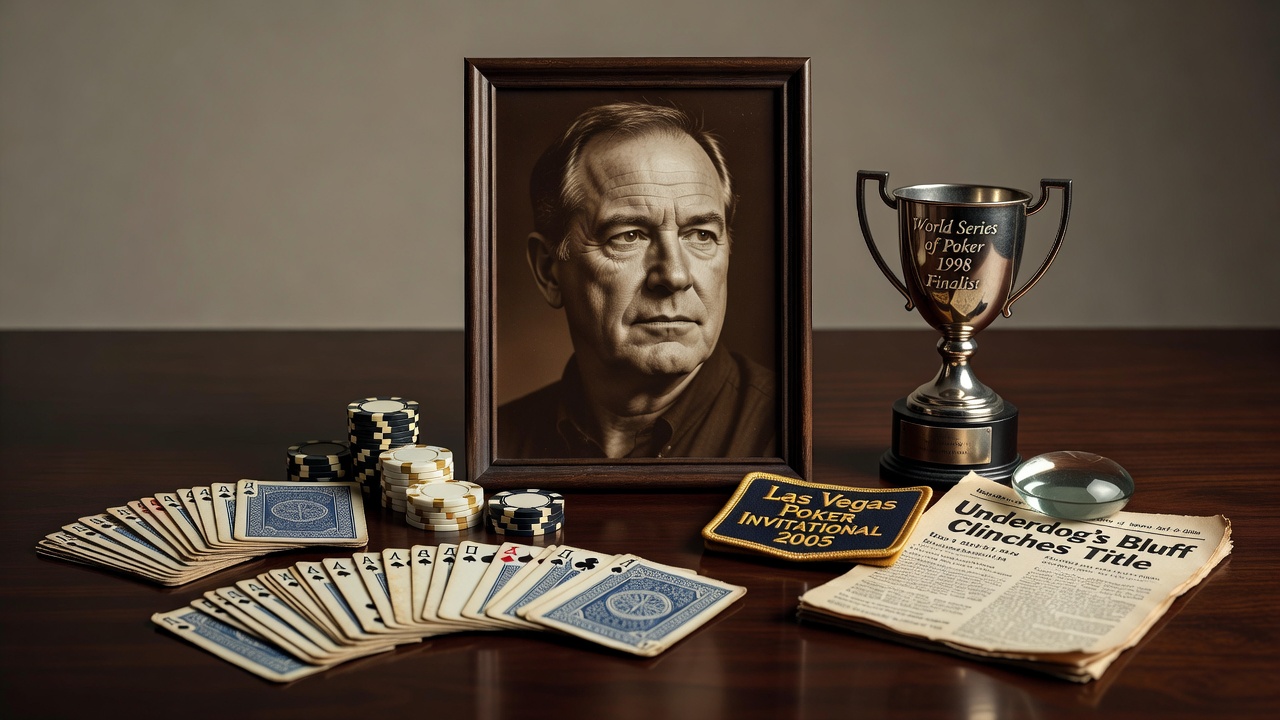
I first became interested in Stu Ungar through a fraud case that had nothing to do with him directly. A man named Kevin had made his living following high-stakes poker players, learning their tells, then relaying information to confederates working against them. Kevin kept a detailed notebook. In that notebook, Ungar came up more times than anyone else.
Key phrase in that notebook: "The Kid reads people like he reads air."
Ungar's gift was genuinely unusual. Most poker professionals have one skill: they calculate odds better than you do, or they manage risk better, or they control their emotions better. Ungar had all three, plus something else. He could look at the way a man held his chips and know what he was thinking.
The Rise
Ungar grew up in Las Vegas in the 1960s, the son of a bookie and a card player. By age sixteen, he was already beating the best local games. He did not go to college. He did not need to. The casino floor was his college.
He won the World Series of Poker Main Event three times: 1980, 1981, and 1997. The first two victories came before his thirtieth birthday. He was on top of a mountain that almost no one else could even see.
The way he played was radical. He did things at the table that violated every principle of tight poker. He played loose. He was aggressive. He bluffed constantly. He did this not because he was reckless but because he could see things in his opponents that others could not. His calculated aggression was actually calculation masquerading as intuition.
The Collapse
Here is where the story turns into the kind of case I used to work. Ungar started using cocaine in the 1980s. The drug made his gift worse and worse. It accelerated the decline. Someone with his level of insecurity, his need for control, his temperament, cocaine was like putting a loaded gun in the hands of someone standing in water.
He lost his money. Not gradually. He cycled through five million dollars in winnings and lost it. He played worse when he was using. His reads stayed sharp but his judgment disappeared. The clarity became clouded. The thing that made him great turned into the thing that destroyed him.
By the 1990s, Ungar was in and out of treatment. He was playing in smaller games. His hands shook. He was thin. People who had watched him play in the 1980s said they barely recognized him.
He won the 1997 Main Event anyway. One last time. Clean. Sober. Against all the new young players who thought they owned the game. It is the kind of thing that should be a redemption story, but it is not. Because what happens after is what matters.
The Documentary
The 2014 documentary High Roller does not shy away from any of this. It interviews Ungar's friends, his family, the players who were with him in those dark years. It shows his deterioration plainly. It does not sensationalize. It simply documents what happened to a man with a gift so profound that he could not live with what came along with it.
When you watch it, what strikes you is that Ungar never lost the gift. His talent did not diminish. He simply became incapable of using it because his mind was poisoned. A perfectly calibrated instrument stuffed full of harmful chemicals.
The Lesson
Ungar died in 1998, in a Las Vegas motel room, from a cocaine overdose combined with hepatitis C. He was fifty. Fifty years old.
The documentary does not try to make him a hero or a cautionary tale. It simply shows the trajectory: a man born into the wrong city at the wrong time with the wrong gift and the wrong weakness. What makes the story stick with you is how ordinary the machinery of his destruction was. Same drugs. Same loss. Same loneliness. But applied to someone who could read a room better than anyone alive.