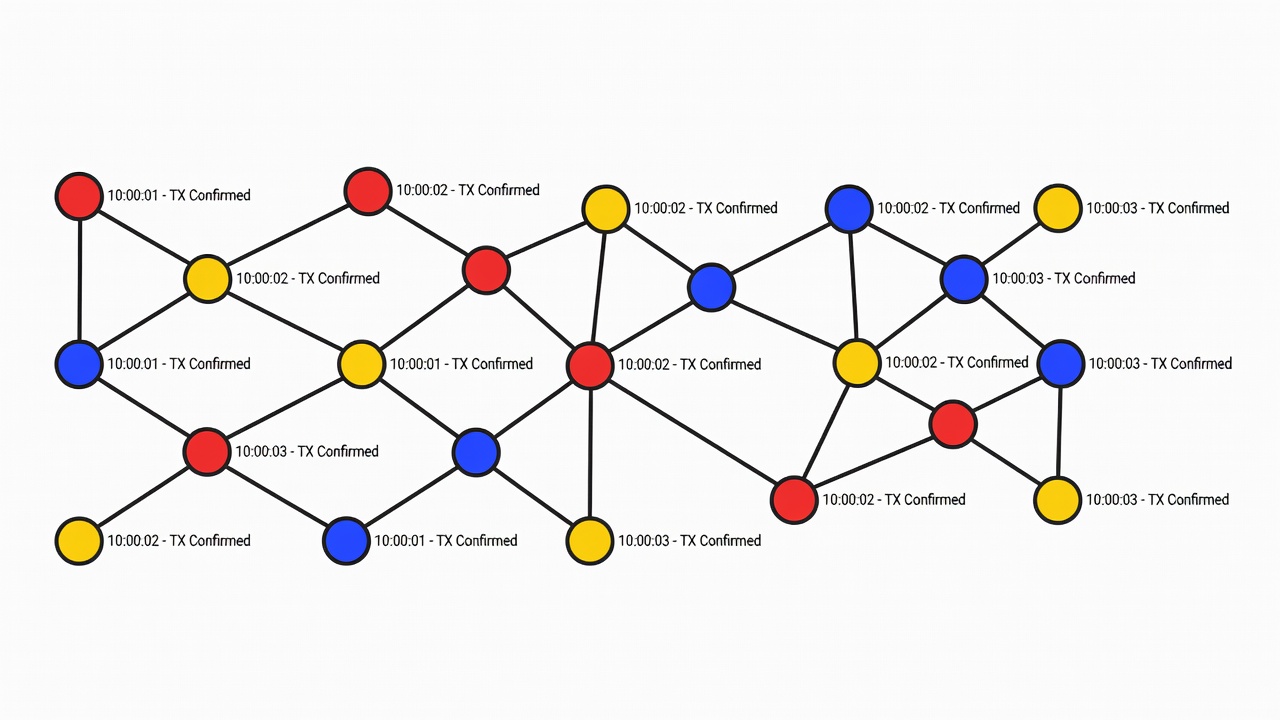
A blockchain confirmation means that your transaction has been included in a block on the blockchain. The first confirmation happens when a miner includes your transaction in a block. Subsequent confirmations happen as additional blocks are added to the chain after your block.
One confirmation sounds like completion. It is not. One confirmation means your transaction is recorded, but it exists in a vulnerable state. If the blockchain forks, and the fork takes the larger hashrate, your block and your transaction could be orphaned. Your money disappears from existence, and the transaction becomes invalid.
The Risk
Bitcoin confirmations take roughly 10 minutes per block on average. Ethereum confirmations take roughly 12 seconds. A single confirmation on Bitcoin leaves your transaction vulnerable for approximately 10 minutes. A single confirmation on Ethereum leaves it vulnerable for 12 seconds.
Vulnerable does not mean at immediate risk. The probability of a fork happening within 10 minutes is low. The probability increases with each passing block, but slowly.
Most exchanges and casinos require a minimum number of confirmations before they credit your account. Bitcoin typically requires 3-6 confirmations (30-60 minutes). Ethereum requires 12-32 confirmations (2-4 minutes).
The Finality Question
There is no true finality on a blockchain in the way there is finality on a bank ledger. A bank's statement is final. A blockchain's transaction is reversible, in theory, if sufficient computing power is applied to rewrite the chain.
But the practical finality is reasonable. After 6 Bitcoin confirmations, the probability of a fork reverting your transaction is vanishingly small. The energy cost of rewriting 6 blocks would exceed the profit from stealing your coins in almost every circumstance.
Why Casinos Require Confirmations
Online casinos require confirmations to prevent double-spending. You send 1 Bitcoin to the casino. You also send 1 Bitcoin to another address. The blockchain initially shows both transactions. As blocks are mined, the network consensus emerges about which transaction is valid.
If the casino credits your account after 0 confirmations, they are gambling that your transaction will not be reversed. A sophisticated player might exploit this by sending conflicting transactions to multiple addresses simultaneously.
Six confirmations represents a point where the statistical likelihood of reversal is low enough that the casino's expected loss from reversal is minimal.
The Wait
For a Bitcoin deposit, a 6-confirmation wait means 60 minutes on average. This is annoying. It is also necessary for security.
Some casinos offer instant deposits before confirmations arrive, assuming the credit risk themselves. These casinos bear the cost of potential fraud. They offset this cost through slightly reduced payouts or increased house edge.
Layer 2 Solutions
To reduce wait times, some casinos accept deposits on Ethereum Layer 2 networks (Polygon, Arbitrum, Optimism) or Bitcoin Layer 2 networks (Lightning). These networks finalize transactions in seconds, not minutes.
Layer 2 transactions are technically not Bitcoin or Ethereum transactions. They are promises that will eventually be settled on the main chain. This reduces the security model slightly but makes deposits practical.
Stablecoin Deposits
Many casinos now accept stablecoins: USDC, USDT, DAI. These reduce the volatility problem (your deposit worth loses value while it sits waiting for confirmations) and the confirmation time problem if sent on fast networks.
A USDC deposit on Polygon confirms in seconds. Your money is effectively at the casino immediately.