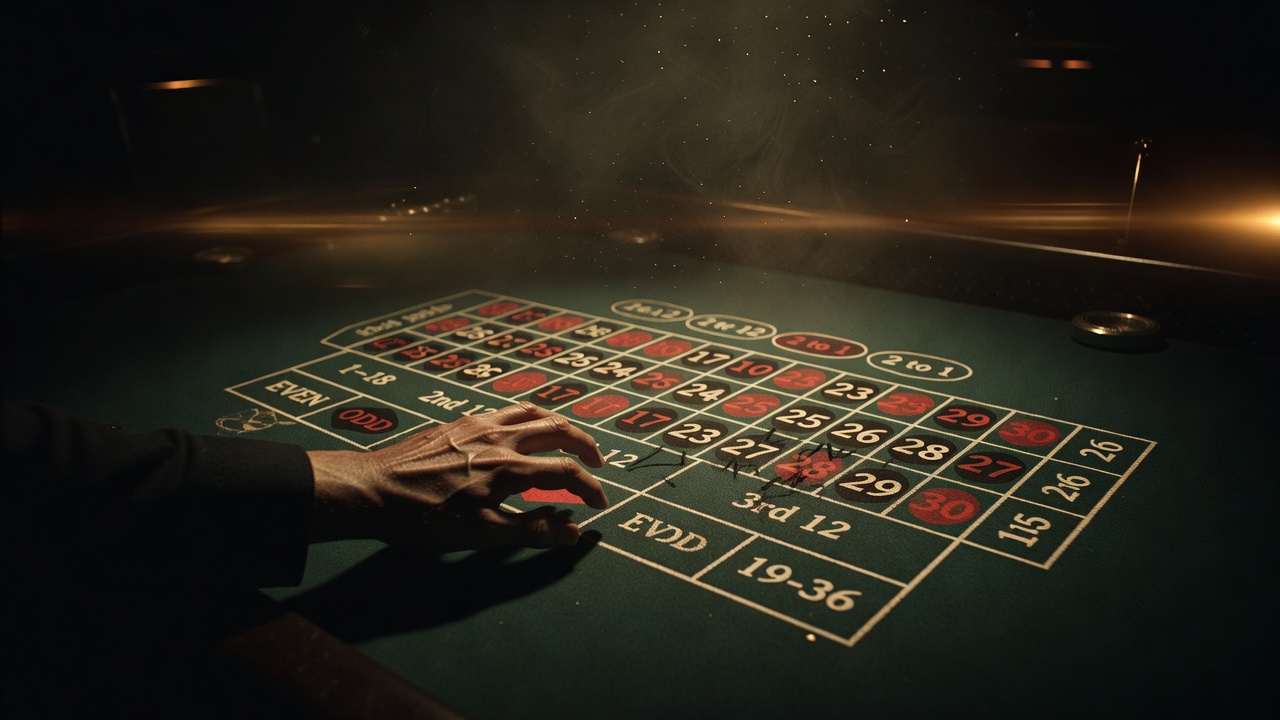
So I am sitting at the Jockey Club, right, this is 1987, and the roulette wheel is spinning, and I am losing money the way you lose water through a sieve. Steady. Inevitable. No drama in it at all. And this man next to me, he has one of those faces that tells you he has seen the inside of every card room from Vienna to Algiers. Scar above his left eye. Gold ring on the wrong hand. He orders champagne that costs more than my hotel room.
He says to me, "You are playing it all wrong."
I am not in the mood to be insulted, but I listen.
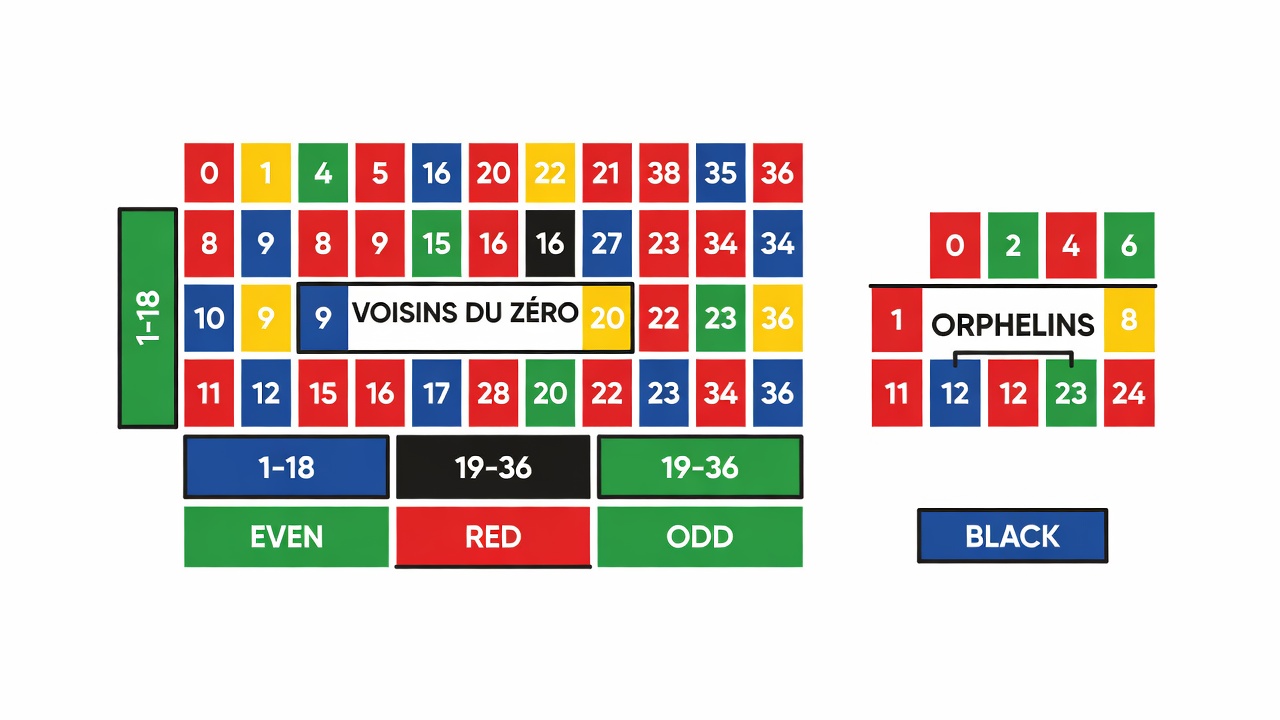
Voisins du Zero, or Neighbors of Zero
This man explains that the best bets on a European wheel are not the ones everyone thinks about. He calls over a stack of chips, the kind of stack that makes the dealer sit up straighter. He starts placing bets in the pattern he calls Voisins du Zero. Here is what that means.
On a European wheel, the zero is surrounded by numbers. Specifically, the numbers on either side: 26, 3, 35, 12, 28, 29, 31, 9, 22, 18, 29, 7, 28, 12, 35, 3. I am paraphrasing. The point is there is a neighborhood. You cover seventeen numbers total, centered on the zero. It costs nine chips to do it properly. You get a little action on more of the wheel than usual.
The man says, "You are no longer hoping. You are planning."
Tiers, or Thirds
Then he shows me Tiers du Cylindre. This one covers exactly one third of the wheel, the third opposite the zero. The numbers on the other side of the wheel from zero. This costs six chips. Again, it is not about luck. It is about geometry.
He places his bets with the precision of someone putting down a chess piece. Not quickly. With thought.
"Tiers means you have eliminated most of the wheel," he says. "What remains is the problem you want to solve."
Orphelins, or Orphans
The third bet is Orphelins. These are the numbers that fall outside the Voisins and Tiers neighborhoods. Five numbers. Eight chips. Orphaned numbers on their own.
I ask him why a man would bet on the orphans.
He smiles. "Because sometimes the numbers nobody wants are the ones that come in."
We play until the light changes from electric-yellow to real daylight. The man from Marseille wins. Not much. Not the way you win in the movies. Just small, steady, patient wins. Like he is not fighting the wheel but negotiating with it.
At the end of the night, he tells me something I have never forgotten. He says these called bets work because they use the geometry of the wheel against itself. You are not asking for one number. You are asking for neighborhoods, thirds, families of numbers. The odds are still against you, because the odds are always against you. But you are not playing every spin like it is your first day on Earth anymore.
You are playing it like you have been here before.