The roulette wheel has not changed materially since 1842. It remains a device of sublime mechanical simplicity: a wheel with 37 or 38 pockets, a rotor, a spindle, a deflector, a croupier with steady hands. The mathematics is immutable. Every bet has a known house edge. European roulette offers 2.7 percent. American roulette, with its double zero, offers 5.26 percent. These figures have not budged in 180 years.
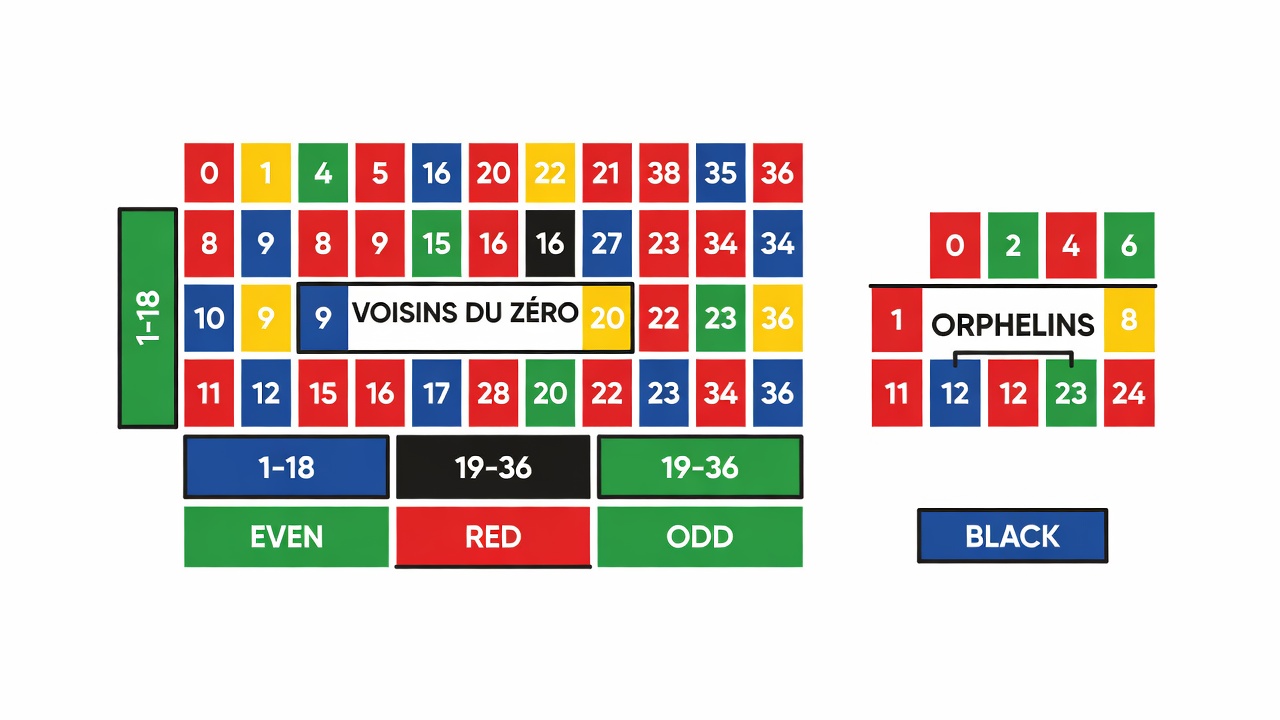
But roulette betting layouts have evolved considerably. In brick-and-mortar casinos across the Commonwealth, one finds the racetrack layout: a secondary betting surface positioned above or adjacent to the main betting grid, displaying bets that group numbers in patterns beyond the standard red-black, odd-even, dozens divisions.
Overview
This section outlines the key aspects of the topic.
The racetrack emerged from practical necessity. A professional player wagering on finals (single digits 0 through 9 that end multiple numbers) or on voisins du zero (the seventeen numbers clustered near zero) cannot place chips efficiently on the standard layout. Voisins du zero requires chips on 17, 34, 6, 13, 11, 14, 31, 9, 22, 18, 29, 28, 12, 35, 3, 26, 0. That is eleven separate placements of chips. A busy table with seven players cannot accommodate the time this requires. The racetrack layout permits a single call: voisins du zero, and the croupier places the chips once.
The racetrack displays the classical divisions employed in European casinos for centuries. Orphelins covers the eight numbers that lie orphaned between voisins du zero and tiers du cylindre: 1, 20, 14, 31, 9, 22, 18, 29. Tiers du cylindre covers the twelve numbers on the opposite side of the wheel from zero: 27, 13, 36, 11, 30, 8, 23, 10, 5, 24, 16, 33. These bets represent a complete covering of the wheel except for 26, 0, 32, 15, 19, 4, 21, 2, 25, 17, 34, 6.
The layout's visual presentation matters more than casual gamblers recognise. The numbers appear in wheel order, not in numerical sequence. This mirrors the actual wheel position. When a player observes that a number has appeared four times from the voisins quadrant, the racetrack layout makes this pattern immediately visible; the number clusters on the layout itself. A player using only the main grid would need to mentally cross-reference spins against wheel sections. The racetrack does the visual work.
The British regulatory approach to the racetrack differs from Continental interpretation. The UKGC permits the racetrack as an aid to legible wagering. French law, historically more conservative, restricted racetrack use in certain venues. The distinction reflects differing views on whether accelerated play and complex betting constitute either benefit or risk to punters. A faster pace increases volume. A clearer layout reduces errors.
One observes, when examining actual play on racetrack tables, that the format attracts a particular demographic. Professional players favour it. Casual players often avoid it, finding the wheel divisions too abstract. A person comfortable betting red or black finds no appeal in tiers du cylindre. This self-selection means racetrack tables concentrate experienced wagerers and accelerate the pace of play. House revenue per hour increases not through the odds but through the volume of spins.
The layout ultimately reflects something British gambling culture learned long ago: clarity serves everyone. A bettor understanding what they have wagered makes better decisions. Whether that decision ultimately favours them matters less to the venue than that the decision was made freely. The racetrack, despite its visual complexity, succeeds precisely because it simplifies the act of placing sophisticated wagers. No confusion survives a well-marked racetrack. The wheel remains unchanged. The house edge remains unchanged. Only the clarity changes.