The Pre-HTML5 Era: 2005-2014
In 2005, mobile phones were not gaming devices. They were communication devices with small screens. Slots on mobile did not exist in any meaningful form.
By 2010, the iPhone and Android had changed this. Operators began developing native apps: one app for iOS, one for Android, occasionally one for Windows Phone (which was short-lived).
NetEnt released their first mobile slot (Divine Fortune) as a native app for iOS in 2009. It was technically impressive for its time but required separate development for Android and other platforms.
The fragmentation was expensive. A game cost 50,000-100,000 pounds to develop for a single platform. Developing for three platforms meant three codebases, three bug-testing cycles, three times the maintenance cost.
Operators made strategic choices: focus on iOS (where gambling players spent more money), or divide resources across platforms and accept lower quality on each.
Flash as a Transitional Technology (2008-2014)
Flash provided a partial solution. A game written in Flash could theoretically run on any phone with Flash Player. In practice:
- iOS never supported Flash (Apple's decision)
- Android supported Flash until 2012, then dropped it
- Flash performance on mobile was poor
The Flash years were economically difficult for game makers. They either wrote for two audiences (native apps for iOS, Flash for Android) or wrote Flash and accepted that they could not reach iPhone users.
Pragmatic Play chose the two-audience route. NetEnt followed them. Both invested in parallel codebases.
HTML5 Emerges (2013-2014)
HTML5 arrived with Canvas (for graphics), WebGL (for 3D), and modern JavaScript engines that were fast enough for games.
The transition was not immediate. Early HTML5 games had performance issues. Graphics were slower than Flash or native apps. Battery drain was higher than expected.
But the economics were undeniable: one codebase, three platforms (iOS, Android, Windows), massive cost savings.
Microgaming began migrating their catalogue to HTML5 in 2013. Pragmatic Play followed in 2014-2015. NetEnt was slower, not completing their full transition until 2017.
The Design Shift
HTML5 imposed technical constraints that altered game design:
1. File Size Reduction
Native apps could be 50-100 MB (including graphics assets, sounds, et cetera). HTML5 games had to fit in 10-20 MB to load reasonably on 3G connections.
This forced asset optimization. Designers learned to:
- Compress graphics more aggressively
- Use sprite sheets instead of individual images
- Reduce animation frame counts
- Limit sound samples
The constraint was creative. Smaller assets forced more elegant design.
2. Animation Quality Changes
Native apps could run 60fps (frames per second) animations smoothly. HTML5 on older phones ran 30fps or lower, with frequent stutters.
Game designers adapted by:
- Using fewer animated symbols per reel
- Replacing physics-based animations with simpler tweens
- Reducing visual complexity during bonus rounds
The result was stylistically different from native apps. HTML5 slots looked flatter, simpler. This was not artistic choice. It was technical necessity.
3. Touch Interface Optimization
HTML5 made touch interaction built-in. Native apps had to implement touch separately.
Slot games adapted:
- Buttons became larger (touch targets need to be 48x48 pixels minimum)
- Menus simplified
- Animations were sequenced (wait for touch, then animate) rather than continuous
These changes made HTML5 games feel more responsive. A player tapping the screen saw immediate feedback, rather than an animation completing before registering the input.
The Performance War (2015-2018)
Despite HTML5's advantages, performance concerns lingered. On low-end Android phones (which represented 40%+ of the player base), HTML5 games stuttered.
Developers created "quality tier" systems:
- High-end phones (iPhone 6+, Samsung Galaxy S6+): full graphics, 60fps
- Mid-range phones (iPhone 5, older Androids): reduced graphics, 30fps
- Low-end phones: minimal graphics, 15-20fps
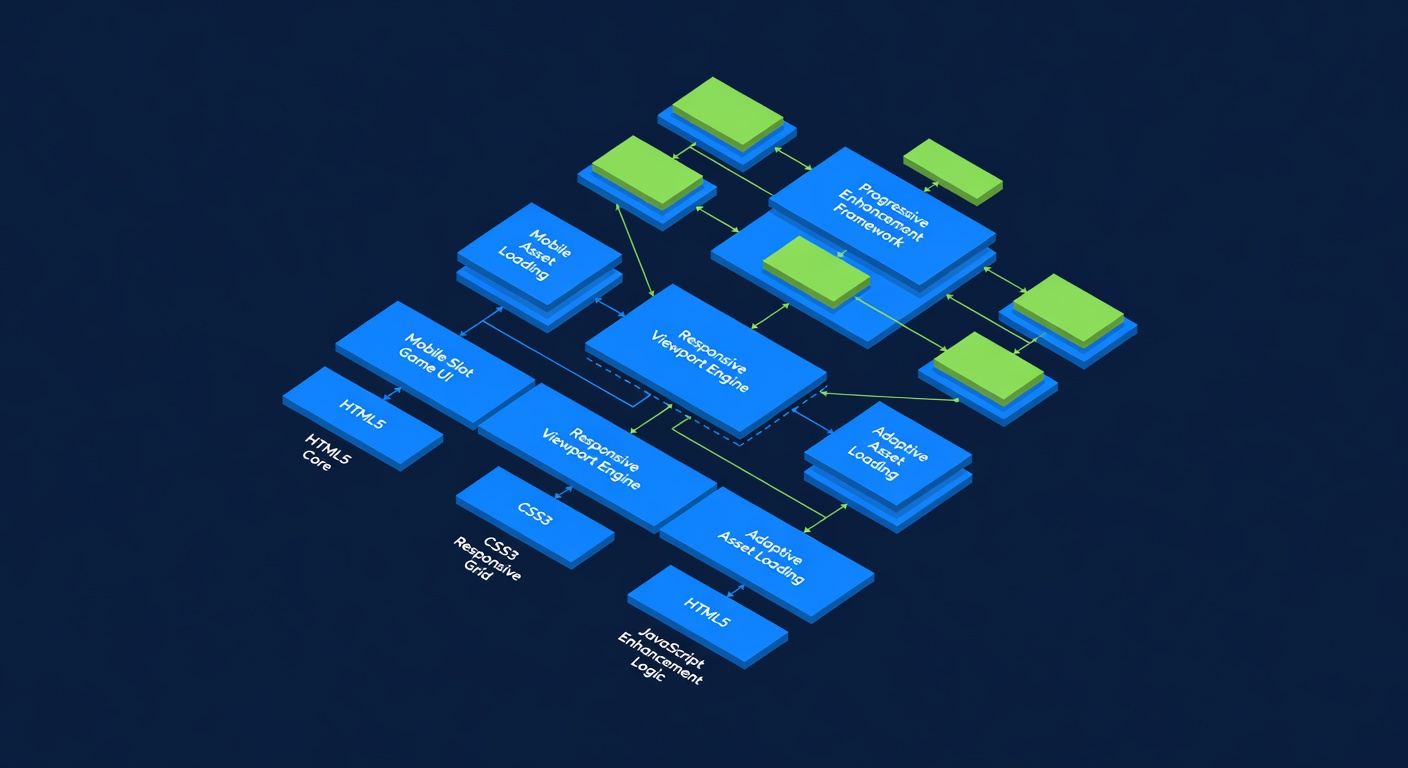
A single codebase could now run on any device and adapt its visual quality automatically. This solved the fragmentation problem.
Pragmatic Play implemented this in 2016. Within a year, most major developers had similar systems.
Asset Streaming and Progressive Load
HTML5 enabled a new feature: streaming assets while the game is played.
Instead of loading all game assets before playing, a slot could:
- Load base symbols immediately
- Stream bonus animations in the background
- Load detailed graphics only when needed
This reduced load time from 30-60 seconds (Flash era) to 10-15 seconds (early HTML5) to 3-5 seconds (modern HTML5 with streaming).
The Modern State (2018-2024)
By 2018, HTML5 was standard. The last major developers (including NetEnt) had completed their migration.
Game design had fully adapted to HTML5 constraints:
- Asset budgets were optimized (5-15 MB per game)
- Animation was designed for mobile-first (simple, clear, responsive)
- Touch interface was primary (mouse was secondary)
The slot games released in 2018-2024 look visually different from 2014 games, not because of artistic evolution, but because of technical evolution.
Modern HTML5 slots are:
- Faster to load
- More responsive to input
- Less battery-intensive
- More accessible on low-end hardware
These were all forced by the technology, not chosen by designers.
Conclusion
HTML5 was a technical shift that became a design shift. The games that work well on HTML5 (simple, responsive, optimized assets) became the games that are made.
Evolution Gaming made a different choice: they doubled down on Flash for live games and did not migrate to HTML5 until very late (2019-2020). The result is that live games lag behind slots in performance and mobile responsiveness.
This is not a criticism. It is a observation: technology and design are not separate. The platform chosen determines the game that emerges.
HTML5 did not just change the platform. It changed slots.