How Provably Fair Gambling Works: The Cryptography Behind It

How Provably Fair Gambling Works: The Cryptography Behind It

Noah Grant
Share

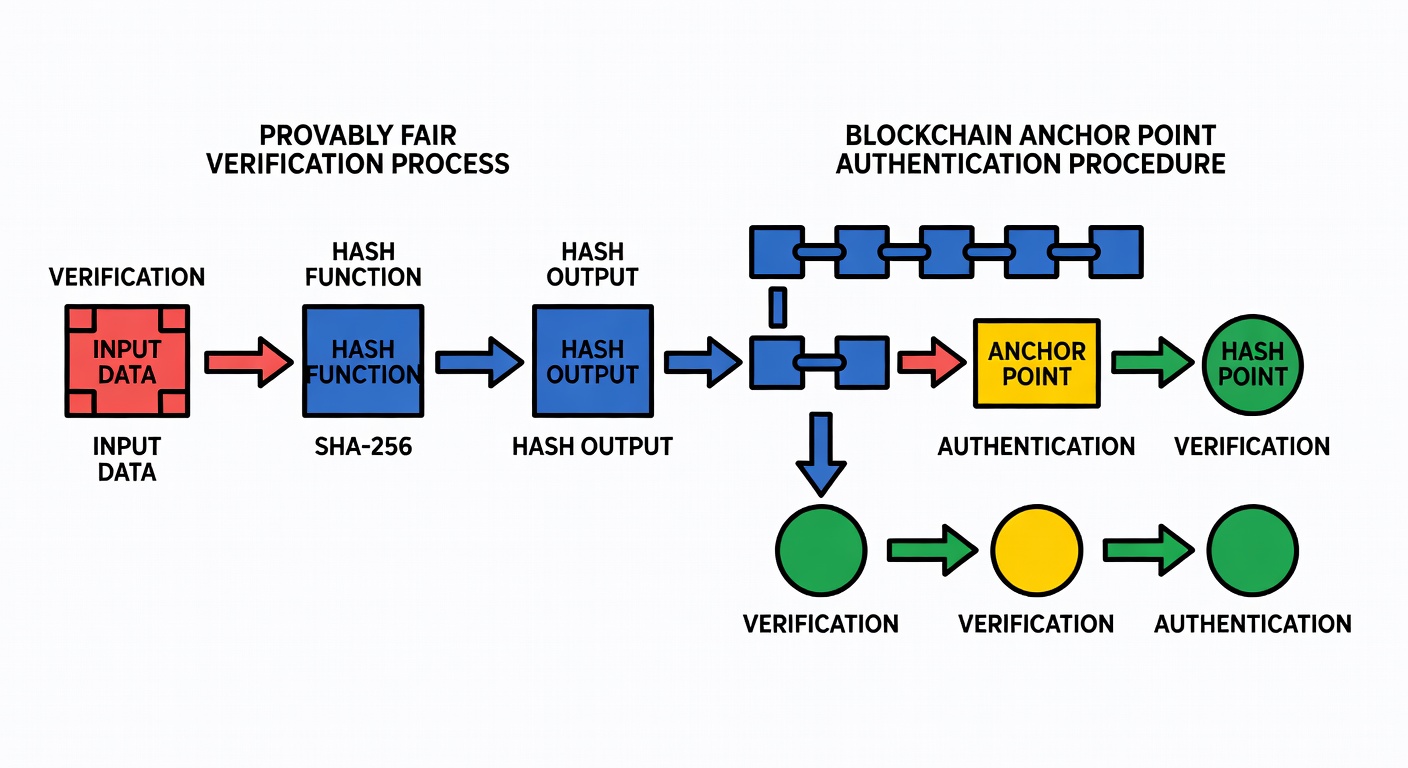
The Basic Idea In traditional online gambling, you trust the casino. You trust their RNG. You trust their encryption. With provably fair, you don't trust anything. The casino proves, mathematically, that they didn't cheat. Here's how: Before you play, the casino generates a random number and hashes it. They give you the hash. You can't reverse a hash. You can't see the original number. But you can verify it later. ## The Hash Function A hash function is one-way math. SHA-256 is common. You feed it data: 'example_nonce_12345'. It outputs: '3c59...abc9' (64 characters). Change one character in the input, the hash changes completely. Run it again with the same input, you get the same hash. The casino gives you their hash. They don't tell you the nonce. You play. You win or lose. Then they show you the nonce they used. You run the hash function on that nonce yourself. If your hash matches their hash, they didn't cheat. They couldn't have changed the nonce because changing it would change the hash, and you already saw their hash before you played. ## Your Input Too This is where provably fair gets clever. You also contribute randomness. Your input might be the block hash of Bitcoin block number X, or a random number you choose, or the time of your bet rounded to the second. The casino can't predict your input before you make it. You can't change your input after the fact without the casino detecting it (they have records). So the final outcome is: hash(casino_nonce + your_input + other_data). This outcome is deterministic. Run the same inputs through the same hash, you get the same result every time. Neither you nor the casino can manipulate it. ## The RNG Translation The hash output is a long string of characters. To translate it to a game result, the casino uses a known algorithm. For a slot with 4096 possible outcomes, they take the hash modulo 4096. The result is between 0 and 4095. That number corresponds to a reel outcome. You can verify this too. You can take the hash they showed you, apply their algorithm, and confirm the reel outcome matches. ## Why This Works The beauty is asymmetry. The casino proves what happened without revealing next outcome in advance. Before you play, they show a hash. After you play, they show the nonce. You verify. If anything is wrong, you have cryptographic proof. The casino can't show a different nonce after the fact because it won't hash to the original hash. They locked themselves in before you played. This is what 'provably fair' means: provably, using mathematics, that the outcome was determined before you played and wasn't changed after. ## Deeper Understanding Mastering this topic requires consistent attention to the details. The surface-level understanding is often insufficient for making optimal decisions. Experienced players take time to understand the underlying mechanics and psychology. They don't rely on intuition alone; they use data and analysis. Over time, this disciplined approach compounds. Small edges accumulate into substantial advantages. casual player seeking entertainment or someone trying to maximize value, understanding these mechanics improves your decision-making. The information is available. The effort to learn is up to you.

Related posts