A bookmaker receives a question: what are the odds on this event? The answer requires mathematics, market intelligence, and risk management. The process is not intuitive to outsiders because it involves several steps that move in sequence.
First, the bookmaker determines the true probability. This requires understanding the event. For a professional tennis match, the probability depends on player ranking, recent form, surface preference, injury status, and historical head-to-head records. The bookmaker consults all available information.
Some information is public. Rankings are published. Recent results are available. Head-to-head records exist. Other information is private. A player's training is not filmed. Their psychological state is not measured. Their injury status might be understated. The bookmaker estimates probability by combining public data with private estimation.
The Odds Construction Process
A player has a 55 percent true probability of winning. The bookmaker converts this to decimal odds: 1 divided by 0.55 equals 1.82. At 1.82 odds, a dollar bet returns 1.82 dollars if correct. This is the true odds.
But the bookmaker does not offer 1.82 odds. The bookmaker offers 1.78 odds. The difference (1.82 minus 1.78) is the margin. The margin is how the bookmaker profits.
This margin exists whether the bookmaker takes equal money on both sides or not. If the bookmaker receives $1,000 in bets on each outcome, they profit from the margin. If they receive $700 on the favorite and $300 on the underdog, they now face risk. They must adjust odds to balance exposure.
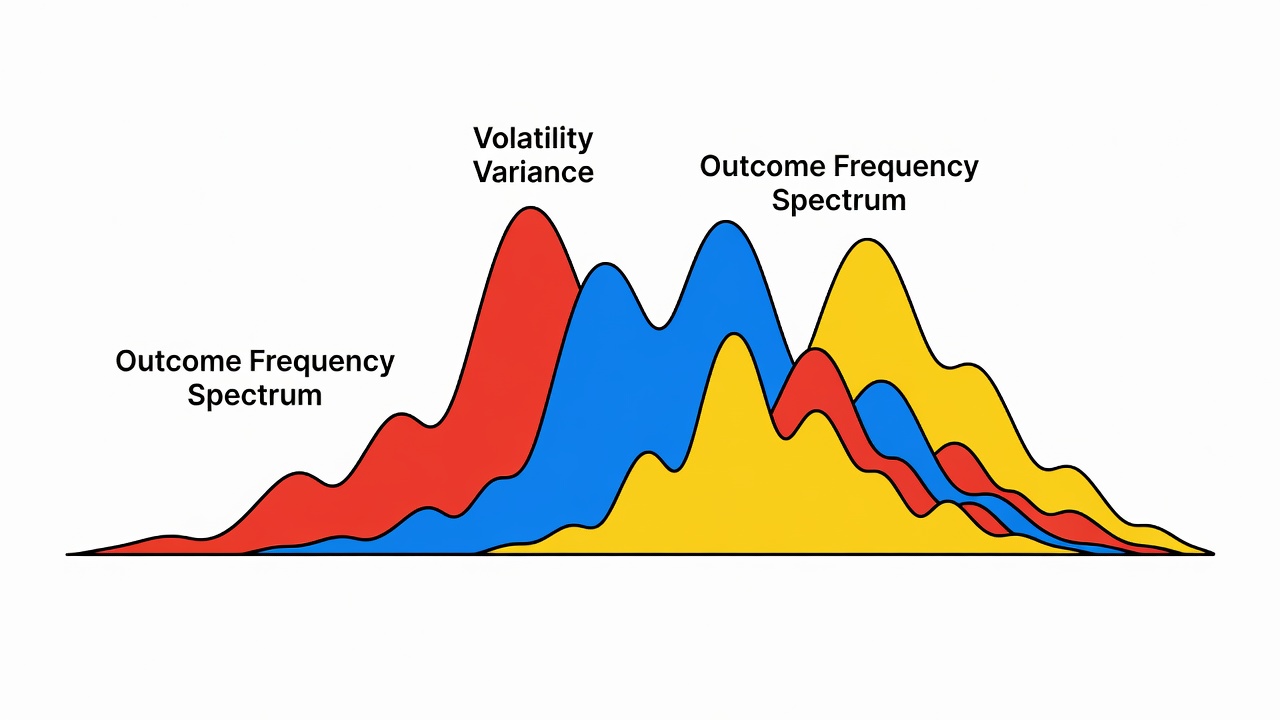
The bookmaker uses implied probability to track this. At 1.78 odds on one side and 2.45 odds on the other, the implied probabilities are 56.2 percent and 40.8 percent. These do not sum to 100 percent. The gap (3 percent) is the vigorish, the bookmaker's margin.
Market Dynamics and Movement
Markets move when information arrives. A player gets injured. A weather forecast changes. A related event influences perception. The bookmaker monitors news sources and adjusts odds in response.
The bookmaker also monitors their own betting patterns. If one outcome receives disproportionate action, the odds shift to balance risk. This is not speculation. This is risk management. The goal is to profit from margin, not to predict correctly.
Sharp bettors exploit this process by betting early when lines are loose, then watching the movement as the market adjusts. By the time casual bettors arrive at kickoff, the sharp money has already moved the line. This is why professional bettors are early bettors. They understand that odds change throughout the market cycle.
Real-World Line Movement
A real example: Monday, the line is Chiefs -7. By Wednesday, it is Chiefs -6.5. By Friday, it is Chiefs -5.5. This movement indicates that money arrived on Tennessee. The sportsbook adjusted odds to reduce their exposure to Chiefs losses.
A sharp bettor who bet Chiefs -7 on Monday and Chiefs -5.5 on Friday has different expected values on seemingly identical bets. The Monday line is better (lower odds to win). The Friday line is worse. This timing difference is why professionals bet early.
The book does not know if Tennessee is actually more likely to win. The book moved the line because money arrived. If $10 million arrived on Tennessee, the line moves. If $100 arrived on Tennessee and $10 million arrived on Kansas City, the line stays put. The movement reflects market activity, not true probability.