Report No. 179
The Difference Between Fixed and Progressive Jackpot Slots
The brief
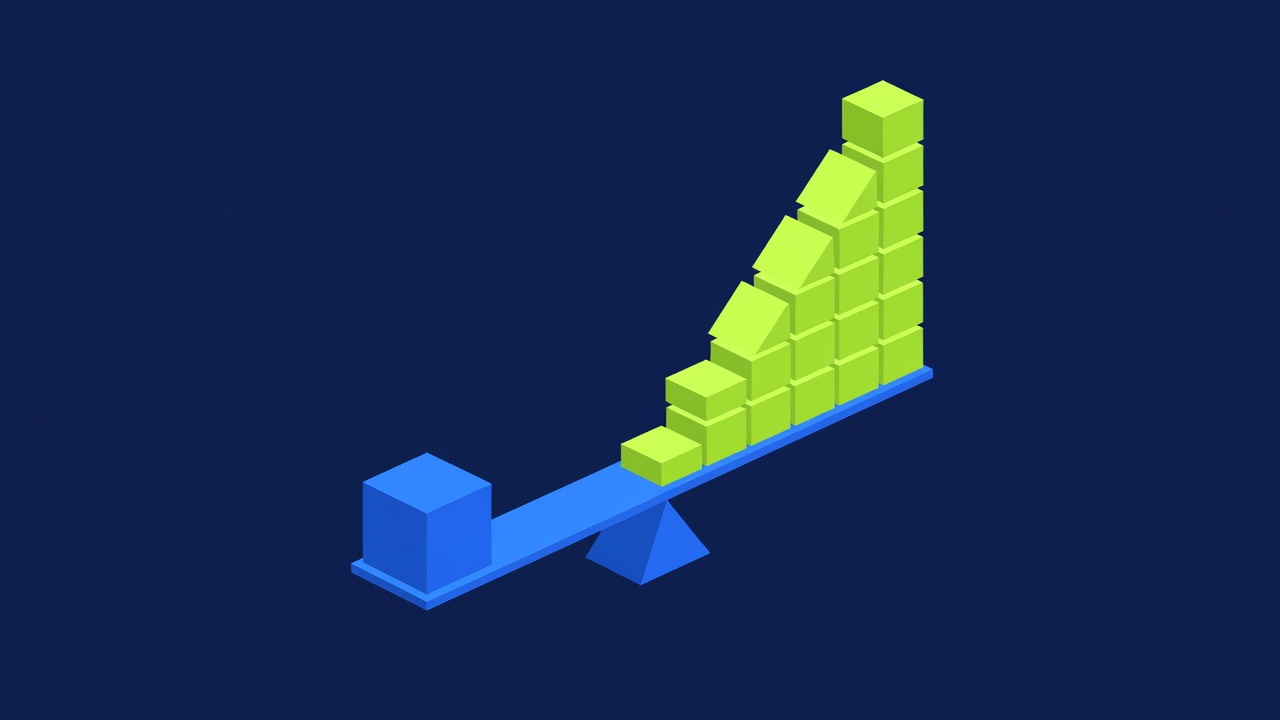
A fixed jackpot is a promise. A progressive jackpot is a machine. You should know which one you're playing.
"Fixed" means the top prize is literally fixed. You play the game, you hit the winning combination, you get exactly 5000 coins, or 50000 coins, or whatever the game design says. The number doesn't change. Pragmatic Play's Book of Ra, for instance, pays a fixed maximum jackpot of 5000 coins on the top symbol combination.
"Progressive" means the jackpot grows with every bet placed on the machine. A percentage of every wager goes into a pool. That pool accumulates. You hit the winning combination, you get the current pool value. Then the pool resets and starts growing again.
Netflix would call this a cliffhanger. Slot operators call it a revenue optimization strategy.
The Math of Each
Fixed jackpot: The operator knows the maximum payout. They set the RTP (Return to Player) with that maximum in mind. A game with a 2500-coin fixed jackpot and 96% RTP has been tested by eCOGRA or iTech to confirm that over 1 million hands, you'll see exactly that distribution.
The mathematics is locked. No surprises.
Progressive jackpot: The operator doesn't know the maximum payout. They know the initial seed (the starting jackpot value). They know the contribution rate (usually 0.5% to 1.5% of each bet). They can model the average time to jackpot hit. But the actual payout is probabilistic and unbounded.
A $10 million progressive jackpot slot designed for 1-in-500-million odds could theoretically pay $50 million before someone hits it if the traffic is high enough.
The RTP is harder to state. Licensed operators publish it, but it's a theoretical average, not a promise. ("This game pays 95% RTP in the long run, but the long run includes the possibility of a $20 million jackpot pool that resets after one hit.")
The progressive jackpot is marketed as "massive payouts." Mathematically, it's a transfer of payout variance from the operator to the player.
Instead of paying out a steady rate of fixed jackpots, the operator pays out fewer medium wins and one massive win. The average is similar. The experience is radically different.
Why Operators Love Progressives
Progressive jackpot slots are the second-largest revenue driver in the slot market, after video poker. Why?
Psychology. A player sees a $500,000 jackpot meter ticking up. They keep playing because "the meter is getting bigger." They feel like they're contributing to their own potential win.
This is fallacious (every spin has the same odds regardless of meter size), but it's powerful.
Operators also love progressives because they create a new kind of sticky player. Not the guy who plays for an hour and leaves. The guy who checks the meter, sees it's at $600,000, thinks "I better get in before someone else wins this," and plays for six hours.
MGM's Mega Moolah is the classic example. Linked across hundreds of casinos, the meter climbs to $10, $20, $30 million. Every casino playing it feeds the meter. Players see this and think "I could be the one." The house sees it and thinks "player retention."
The odds of hitting the Mega Moolah jackpot are roughly 1 in 40 million. Better odds than Powerball. But worse odds than winning 1000x your stake on a fixed jackpot game.
The Conversion Play
Here's the move that separates the skilled operator from the one running a charity:
Fixed jackpot game: Players come, play an hour, leave with slight losses or slight wins. Steady revenue.
Progressive jackpot game: Players come to chase the meter. The meter is lower than they expected. But it's growing. They play two hours. The meter grows. They come back tomorrow to see if it's higher. Now you've got repeat visits.
Then someone hits the $5 million. You publish that. You advertise it. New players come to play the "lucky" game. It happens all the time.
Bet365 and DraftKings both use Pragmatic Play progressives because Pragmatic Play has mastered the meter design. The animation is smooth. The meter updates frequently (multiple times per minute) to create a sense of constant growth. Players watching the meter climb feel like they're participating.
They're not. Every spin is independent. The meter is just a visual representation of the pot.
The Honest Assessment
Fixed jackpots: Predictable. Good for players who want to know the maximum loss and maximum win upfront. Boring for casual players.
Progressive jackpots: Unpredictable. Good for players who want a small chance at a life-changing payout. Compelling because the meter tells a story ("It's never been this high!").
From a pure expected-value perspective, they're mathematically equivalent if the RTP is set correctly. A 95% RTP game with a fixed 10,000-coin jackpot and a 95% RTP progressive that averages to 10,000-coin payout have identical long-term math.
But they produce different emotional experiences. Fixed jackpots reward steady play. Progressive jackpots reward arrival-time luck (showing up when the meter is high).
Operators know this. They offer both. They let the player choose their own psychodrama.
You play fixed, you're playing the math. You play progressive, you're playing the story. The house gets paid either way.