Report No. 166
Joe Hachem's 2005 WSOP Main Event: Australia's Poker Hero
On May 31, 2005, an accountant from Melbourne beat six thousand eight hundred eighty-five other players to win the World Series of Poker Main Event. The outcome was documented. The method was not.
The brief
The 2005 World Series of Poker Main Event started on May 23 at the Rio All-Suite Hotel and Casino in Las Vegas. Six thousand eight hundred eighty-five entrants registered. The entry fee was ten thousand dollars each. The aggregate purse reached approximately sixty-eight million dollars. The largest single match in poker to that point.
Joe Hachem was an accountant from Melbourne, Australia. Age thirty-seven. He had engaged in serious poker for roughly ten years, though his early background sits under-documented. He played cash matches in Australia. He competed in several regional tournaments. However, he possessed no significant worldwide tournament performance. He had never placed at a WSOP before 2005. He was an unknown quantity.
He attained his entry via a satellite competition. He did not buy a ticket directly. He won a smaller competition and utilized the profits to enter the larger competition. This pathway is standard for players without large reserves. It is standard for players uncertain the Main Event offers sound mathematical return.
The Early Rounds
Records for the early stages of a competition this magnitude are restricted. Hundreds of tables conduct play simultaneously. Just the management and participants maintain complete documentation. Hachem's opening phase exists only as fact: he remained standing when day four concluded, when contestants shrank to controllable amounts.
Day five proceeded at the Amazon Chamber, the major competition area. Hachem was among the strongest at his section. He gathered chips methodically. He played tight. He avoided constant confrontation. Other participants noted Hachem as restrained, attentive, and deliberate. He pursued survival poker, not domination.
Day six arrived. The bracket reduced to one hundred ninety. Hachem stayed above expected average. He occupied the upper tier. A recording team was sent to document him. For the initial period, his matches became visible on recording. The history from this position exists.
The Final Table
The ultimate nine arrived at the recorded section at the Rio. Hachem held the largest stack. He started with two million tokens from five million available. His nearest rival retained approximately one-point-eight million. Hachem would claim the title from the head position.
The ultimate gathering included:
- Hachem (Australia)
- Andy Bloch (United States)
- Craig Smith (Canada)
- Minh Ly (United States)
- Imad Derwiche (Switzerland)
- Mike Matusow (United States)
- Philip Hilm (Denmark)
- Arkadiy Tsarev (Russia)
- Paul Darden (United States)
Records cover the eliminations. Hachem ousted Tsarev when Hachem's ace-king outran Tsarev's ace-queen. Hachem ousted Hilm when his pair stayed alive against Hilm's interior straight draw. Hachem ousted Ly when his ace-king was stronger than Ly's ten-jack and succeeded at reveal.
The Heads-Up Match
The ultimate pairing matched Hachem against Andy Bloch. Bloch had secured a World Series bracelet in 2000 and had labored as a specialist for years. He was a known quantity. Hachem was an accountant making his initial substantial run. The story advantage went to Bloch. The chip advantage went to Hachem. Hachem's position represented three-to-one superiority.
Two-person play, the ultimate two-player conflict, receives full recording. The facts are visual. Hachem pursued measured poker. He avoided trying to end it swiftly. He avoided unjustified danger. He allowed Bloch to bluff. He accepted marginal hands when he assessed weakness. He expanded his holdings gradually.
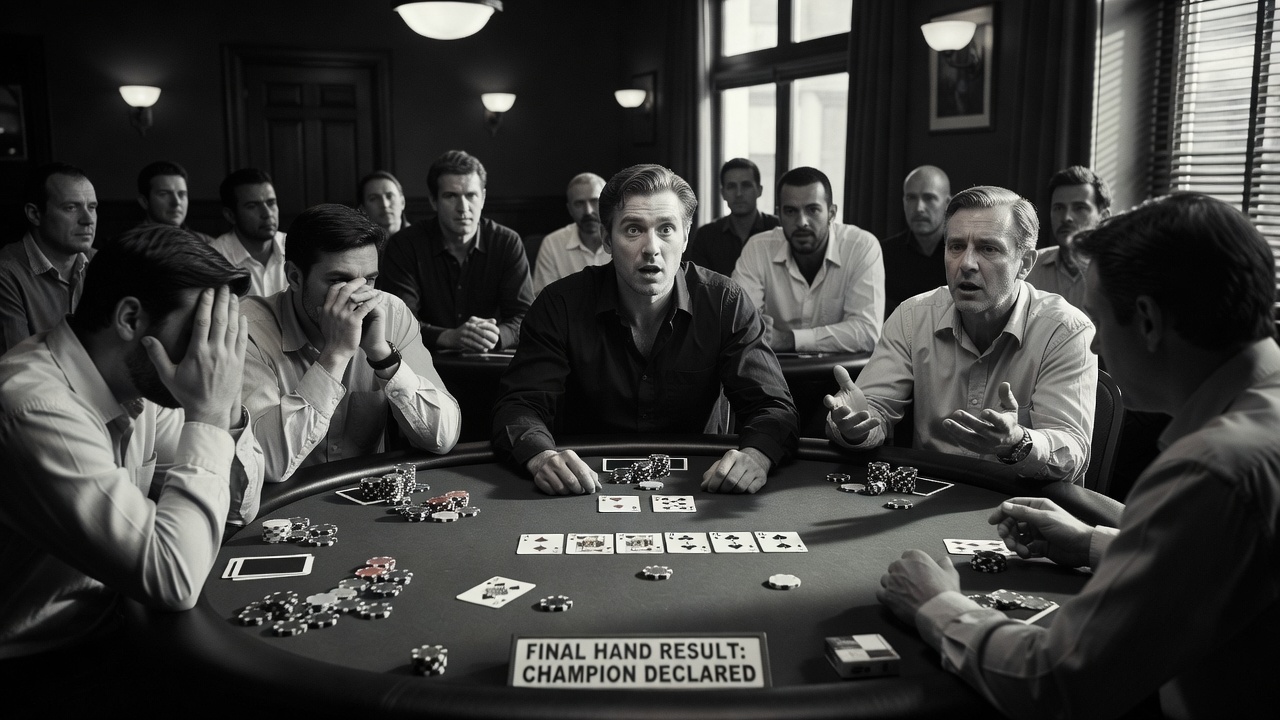
The ultimate hand stays recorded. Hachem held king-queen. Bloch held ten-nine. The community arranged seven-six-five-king-jack. Hachem owned a pair of rulers. Bloch owned nothing. Bloch was without chips. Hachem received the stakes. The conflict finished. Hachem had claimed the competition.
The Aftermath
Hachem's result held importance for multiple factors. One: it registered as unexpected. He occupied no prominent rank. His match performance prior to 2005 remained sparse. He had defeated the largest poker competition ever conducted versus a participant roster carrying better standing. Observers suggested fortune. Hachem caught beneficial cards at crucial seconds. He overcame greater players. This narrative endured.
Two: Hachem's success generated pattern-breaking. An unfamiliar player might claim a major match. This seemed to support the position that poker carries elements of randomness. A recognized player might have appeared strictly fortunate. Yet Hachem's lack of previous standing rendered his success seem less foreseeable. This generated questions.
Three: Hachem's achievement created recognition. He earned three-point-nine million dollars. Recording preserved him. Press covered him. Australian outlets treated him as a national athletic idol. Sponsorships appeared. He became a specialist through requirement.
Following 2005, Hachem remained engaged professionally. He achieved numerous substantial efforts at major competitions. He succeeded at high-stakes matches in Sin City. He established a legitimate poker profession, indicating the 2005 win was not pure randomness, though randomness mattered. Skepticism reduced over time. Hachem had shown himself via repeated performance.
Yet the question never entirely departed. Was 2005 a deviation or proof of true capability? The investigative response is that both hold weight. Hachem possessed capability. He also possessed fortune. The pair cannot be isolated in any individual match, especially with participants numbering six thousand eight hundred eighty-five. The odds of any one player defeating six thousand eight hundred eighty-five rivals are extreme. That Hachem succeeded, with his undistinguished standing, points to either exceptional skill or exceptional fortune. The documents support both possibilities at once.