Report No. 167
Tony G: From Lithuania to Poker Table Trash-Talk Legend
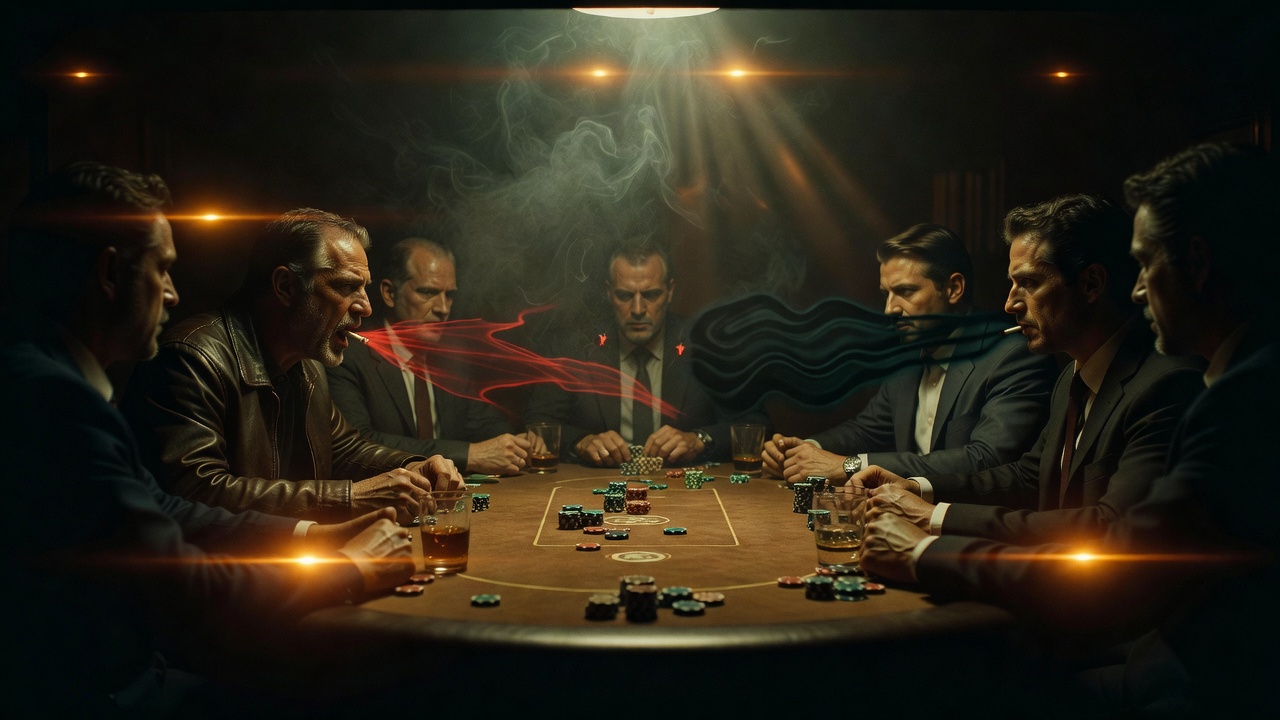
The brief
You meet a guy like Tony Graziano in 1995 and you don't know he's going to become famous for talking at a poker table. You just know he's loud.
Lithuania to Mayfair Casino in London. That's the arc. Small country, big city, bigger mouth.
He showed up in the European poker circuit when the circuit was still a circuit, before it became a content machine. When players were trying to win money, not followers. He was twenty-five. He'd made a name for himself in the London high-stakes game, not because he was the best player but because he wouldn't shut up.
His first big moment was the European Poker Tour in Barcelona, 2000. I wasn't there, but everyone who was there remembers it. He got heads-up with a player named Dave Ulliot, and for six hours straight, Tony didn't stop talking.
Not insults. Conversation. Commentary on his own hand. Commentary on Dave's hand. Running counts of the chip stacks. Philosophy. Complaints about the dealer. Questions to the audience. He was playing poker and performing poker at the same time.
He won that tournament. Won with style.
The Mechanism
Here's what the amateurs don't understand about trash talk at poker: it works because it breaks concentration. A good player needs to calculate odds, read opponents, manage their own emotional state. Constant noise fractures that.
Tony understood this intuitively. He would get under a player's skin not by being mean but by being ubiquitous. Present. Impossible to ignore.
He'd say things like, "You have two more outs than you think," to a player about to fold. Or, "I'm going to reraise you because your mother would want me to." Stupid lines, but delivered with conviction.
The effect was psychological. Players would tilt. They'd make bad decisions because they were angry or off-balance.
Some opponents hated him. Some respected him. Most were confused by him. That confusion was the real weapon.
A player can prepare for aggression. A player can prepare for silence. A player can't prepare for carnival noise wrapped around genuine poker skill.
The Life That Followed
After the success came the circuit. European Poker Tour. World Series of Poker. High-stakes games in Monte Carlo, Manila, Las Vegas.
He became known. Not as the best player. As the voice.
Because he was talking, he was on television more. Because he was on television, he got better sponsorships. Because he had better sponsorships, he could afford better tournaments. Because he was in better tournaments, he won more money.
The talk created the success as much as the poker did.
A man from a small country becomes famous not for being the strongest hand at the table, but for being the loudest. That's a different kind of victory.
Later, much later, he got involved in online poker. Full Tilt Poker. He was their spokesperson. He'd stream games and do commentary. Still talking. Same mechanism, different venue.
The problem is that online poker doesn't need voices anymore. It needs influencers. Streamers. People with production value, not just personality.
Tony's voice worked in the live casinos of Monte Carlo because live casinos are still physical spaces where one person can command attention. Online, you're one window among a hundred. Your noise doesn't travel the same way.
What Stays
Tony G is seventy now. Still plays. Doesn't have the young man's hunger anymore, but he still sits at tables and talks. Still the same mechanism.
He proved that poker talent isn't just mathematics. It's psychology. It's presence. It's the ability to make the room around you bend to your will.
He was from Lithuania playing in London, speaking English with an accent, breaking every rule about how you're supposed to act at the poker table. He won because he was different, not despite it.
That story doesn't exist in 2026 the same way. The young players don't need to make it as a voice. They make it as content. TikTok poker players with fifty thousand followers getting sponsorships.
But in his time, Tony G was the best at what he did: making people listen, making them remember, making them give him money.
The cards don't remember. But the table does.