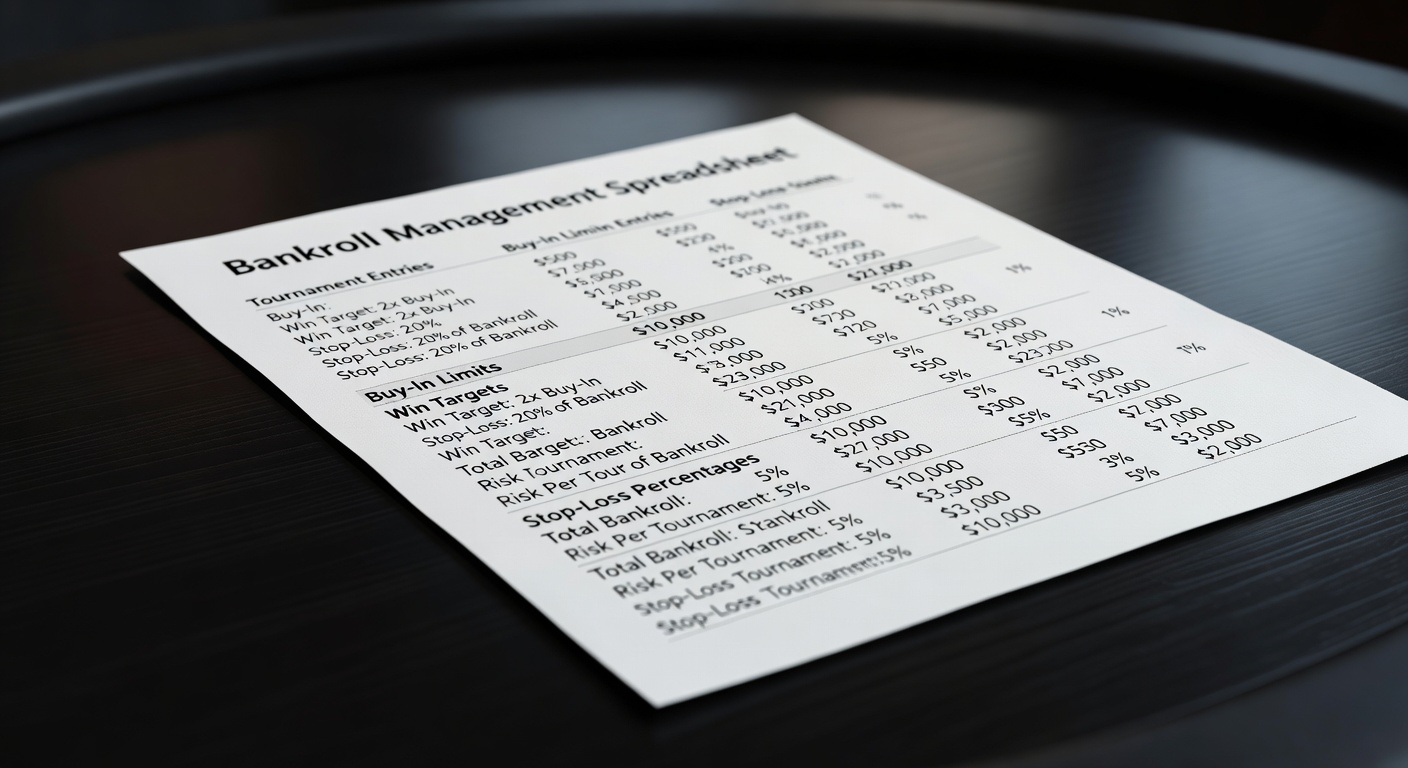
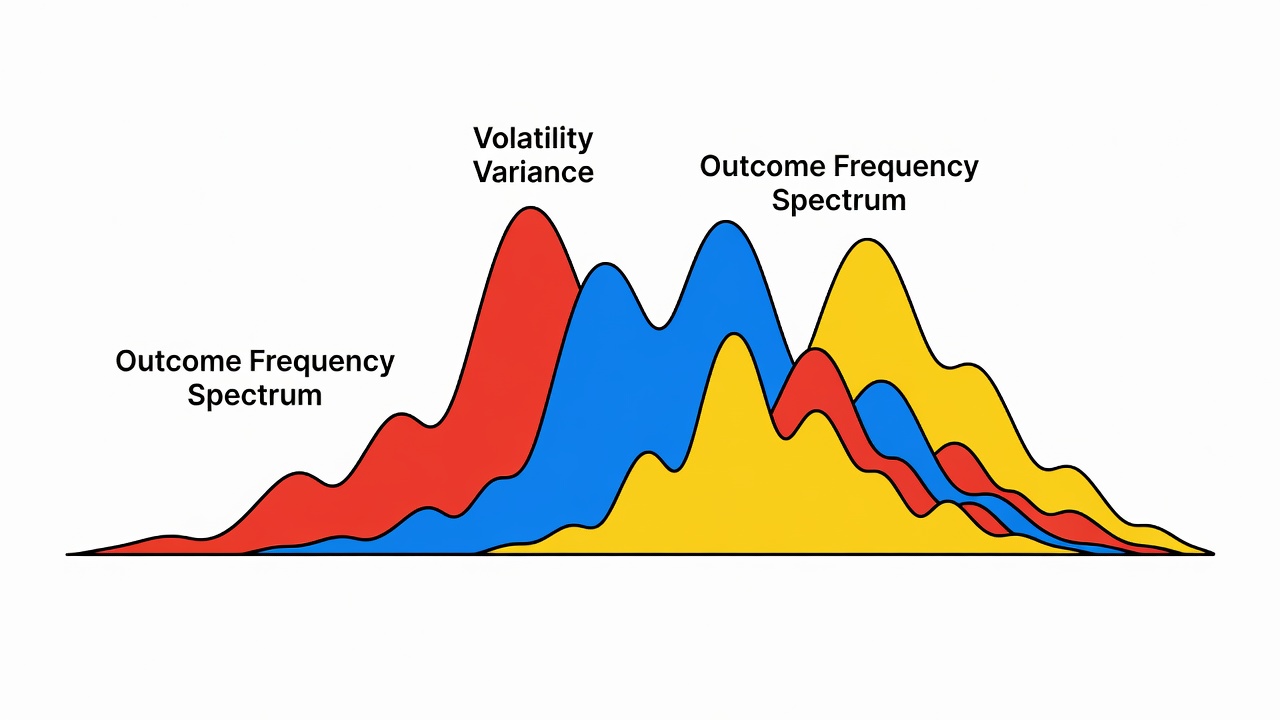
The Basic Rule Buy in for no more than 5 percent of your total bankroll at any single game. If you have $5,000, don't sit down at a game where you might lose that entire amount in a single session. Sit for $250 maximum. This is not about being conservative. It's about surviving downswings. Variance in poker is real. The best players experience 50-session downswings where they lose money despite having a positive win rate. You need a bankroll large enough to absorb these downswings without playing scared money. ## The Tournament Rule Tournament buy-ins should be no more than 2 to 3 percent of your bankroll. Tournaments are higher variance than cash games because you can lose your entire buy-in with bad luck in one moment. A player with a $10,000 bankroll should not be playing $500 tournaments, even if they feel like they play at that level. ## Tier Your Games Keep your bankroll in tiers. If you have $20,000, don't put it all on the table at once. Use $5,000 for cash games, $3,000 for tournaments, $2,000 for side games, and keep $10,000 as emergency capital. This prevents one bad night from wiping you out. ## Stop Loss Discipline Set a stop loss for sessions. If you're down $1,000 on the night, leave. This isn't about tilt management, although it helps. It's about not turning a bad session into a catastrophic one. Most players who go broke do so because they refused to stop playing after large losses. ## The Path Back If your bankroll drops below your minimum threshold, move down in stakes. If you reach $5,000 in your bankroll, you can't play in the $2/$5 game anymore. Drop to $1/$2. This prevents the fatal mistake of playing above your bankroll hoping to win it back quickly. ## The Realistic Number A professional poker player typically needs 300-500 buy-ins for their normal game. If you play $2/$5 consistently, you need $600 to $1,250 minimum. If you can't build that bankroll, either improve your game or find a different income source. Playing without proper bankroll is not grinding; it's gambling. ## Deeper Understanding Mastering this topic requires consistent attention to the details. The surface-level understanding is often insufficient for making optimal decisions. Experienced players take time to understand the underlying mechanics and psychology. They don't rely on intuition alone; they use data and analysis. Over time, this disciplined approach compounds. Small edges accumulate into substantial advantages. casual player seeking entertainment or someone trying to maximize value, understanding these mechanics improves your decision-making. The information is available. The effort to learn is up to you. ## Advanced Considerations Once you master the basics, deeper complexity becomes apparent. Industry professionals work within layers of constraints and opportunities that casual observers miss entirely. Regulatory frameworks shape market dynamics. Technological limitations determine what's possible. Competitive pressures force constant adaptation. Understanding these systemic forces helps you anticipate changes and adjust your strategy accordingly. The casinos and sportsbooks employ teams of specialists to optimize every variable. They study player behavior extensively. They test variations continuously. They measure impact precisely. As a player, you can adopt similar disciplined approaches to your own decision-making. Track your results. Analyze your patterns. Look for biases in your thinking. Question your assumptions regularly. This level of intentional practice distinguishes strong players from average ones.