The Difference Between Soft Books and Sharp Books

The Difference Between Soft Books and Sharp Books

Noah Grant
Share

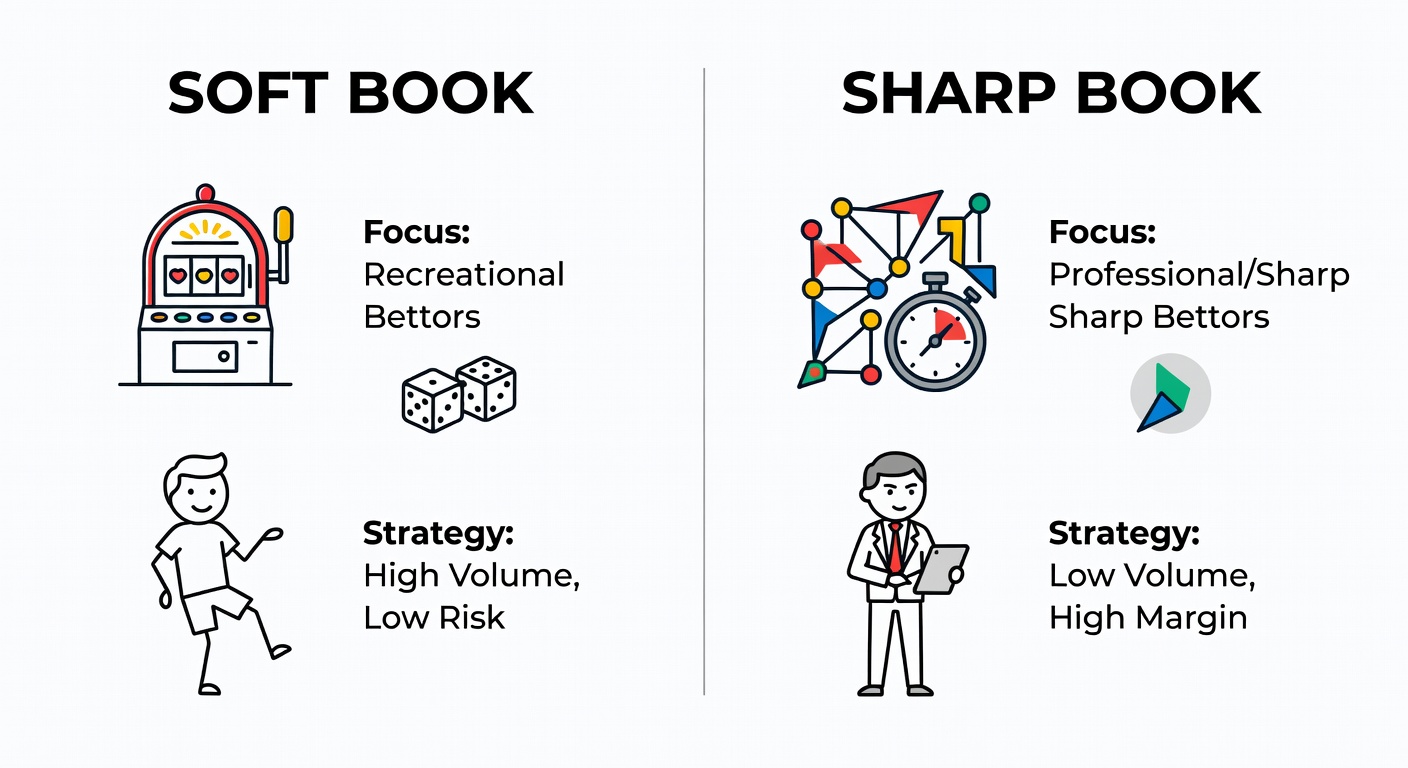
What Soft Means A soft sportsbook is one that primarily attracts casual bettors. DraftKings and FanDuel have soft market presence. The Flamingo has soft sportsbooks. These books make their money from casual action. They don't need every sharp bettor. They actually prefer not to have them. A soft book's margins are built for recreational volume. They don't care if sharp bettors win on individual games. The scale of casual losses more than compensates. ## What Sharp Means A sharp sportsbook is one that primarily attracts professional bettors and syndicates. Pinnacle, some offshore books are sharp. These are market makers, not casinos. They want balanced action on both sides. Their profit comes from juice, the spread between what they pay winners and what they collect from losers. A sharp book will move lines aggressively to balance action. They hate lopsided exposure. They would rather lay even money and collect juice than hold strong opinions on games. ## The Odds Difference You can see the difference by comparing opening lines. A soft book might open the Super Bowl at 3.5 points. A sharp book might open at 3 points. The difference represents where the market's true opinion sits versus where casual money gravitates. Casual bettors often chase favorites. They love big names. This creates opportunities for sharp bettors to find undervalued dogs at soft books. ## The Business Model A soft book can afford to take strong positions because they're betting against their recreational customers. They have actuaries. They price markets knowing their customer base's biases. They don't need to stay perfectly balanced. A sharp book can't afford strong positions. A million dollar swing in exposure is a crisis. They want money on both sides. Their job is housekeeping, not prediction. ## Finding Sharp Value If you're a professional bettor, sharp books are better for long-term play. You won't get limited. Soft books will eventually limit you if you win consistently. They don't want professional action. But soft books' lines, in the short term, can offer better value. A casual-heavy market creates mispricings that sharp bettors exploit. ## Deeper Understanding Mastering this topic requires consistent attention to the details. The surface-level understanding is often insufficient for making optimal decisions. Experienced players take time to understand the underlying mechanics and psychology. They don't rely on intuition alone; they use data and analysis. Over time, this disciplined approach compounds. Small edges accumulate into substantial advantages. casual player seeking entertainment or someone trying to maximize value, understanding these mechanics improves your decision-making. The information is available. The effort to learn is up to you. ## Advanced Considerations Once you master the basics, deeper complexity becomes apparent. Industry professionals work within layers of constraints and opportunities that casual observers miss entirely. Regulatory frameworks shape market dynamics. Technological limitations determine what's possible. Competitive pressures force constant adaptation. Understanding these systemic forces helps you anticipate changes and adjust your strategy accordingly. The casinos and sportsbooks employ teams of specialists to optimize every variable. They study player behavior extensively. They test variations continuously. They measure impact precisely. As a player, you can adopt similar disciplined approaches to your own decision-making. Track your results. Analyze your patterns. Look for biases in your thinking. Question your assumptions regularly. This level of intentional practice distinguishes strong players from average ones.

Related posts