Reading the Board Texture: Wet vs Dry Flops

Reading the Board Texture: Wet vs Dry Flops

Noah Grant
Share

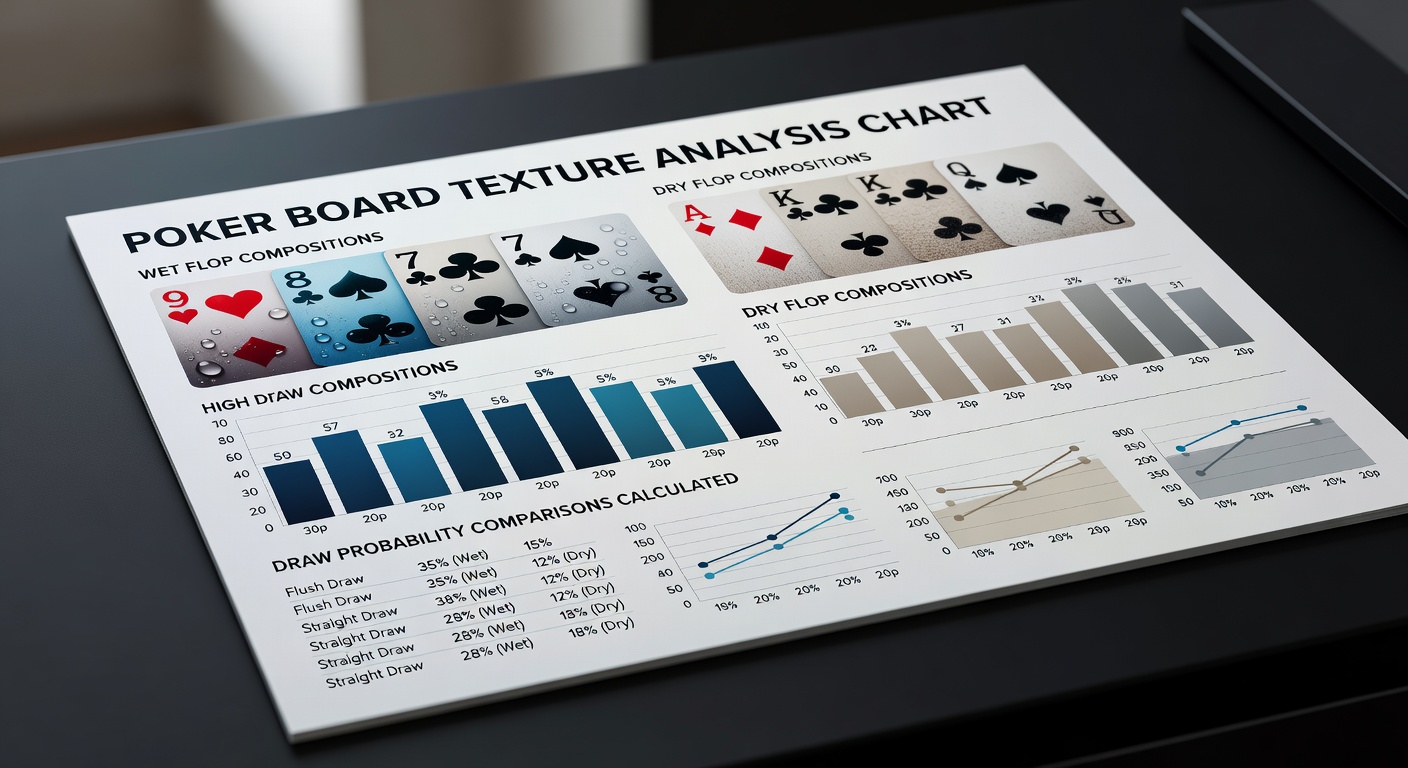
What Wet and Dry Mean A wet flop is one with multiple draws possible. Three to a flush, two cards close in rank, connected cards. A flop of 7-6-5 is wet. A flop of J-9-3 with three different suits is dry. On a wet flop, opponents can hit draws. On a dry flop, they're unlikely to improve much. Your play should adjust accordingly. ## Wet Flop Strategy On a wet flop, you want to build a pot with your made hands. The more money in the middle, the better for your strong holdings. You want to charge draws appropriately. If you have a pair on a wet flop, you want to bet to make it expensive for flush draws. Position matters more on wet flops. Out of position with marginal strength, check. ## Dry Flop Strategy On a dry flop, bet to win immediately or for value. There are fewer draws to worry about. Your opponent with a weak made hand will call or fold. They're not hitting a draw that punishes you. You can bet marginal hands on dry flops for value. A hand like 7-6 on a K-J-2 flop has showdown value. On a wet flop, it doesn't. ## The Texture Changes Throughout the Hand A dry flop can become wet on the turn. A 7-5-2 dry flop becomes much wetter if the turn is a 6. Your strategy that worked on the flop might not work on the turn. This is why hand reading is important. You need to recognize not just the texture of the flop, but how it connects to your opponent's likely holdings. ## The Rule of Thumb Wet flops favor aggressive early play with premium hands. Dry flops favor value betting with wider value ranges. The math is simpler on dry flops because there are fewer variables. ## Deeper Understanding Mastering this topic requires consistent attention to the details. The surface-level understanding is often insufficient for making optimal decisions. Experienced players take time to understand the underlying mechanics and psychology. They don't rely on intuition alone; they use data and analysis. Over time, this disciplined approach compounds. Small edges accumulate into substantial advantages. casual player seeking entertainment or someone trying to maximize value, understanding these mechanics improves your decision-making. The information is available. The effort to learn is up to you. ## Advanced Considerations Once you master the basics, deeper complexity becomes apparent. Industry professionals work within layers of constraints and opportunities that casual observers miss entirely. Regulatory frameworks shape market dynamics. Technological limitations determine what's possible. Competitive pressures force constant adaptation. Understanding these systemic forces helps you anticipate changes and adjust your strategy accordingly. The casinos and sportsbooks employ teams of specialists to optimize every variable. They study player behavior extensively. They test variations continuously. They measure impact precisely. As a player, you can adopt similar disciplined approaches to your own decision-making. Track your results. Analyze your patterns. Look for biases in your thinking. Question your assumptions regularly. This level of intentional practice distinguishes strong players from average ones.

Related posts