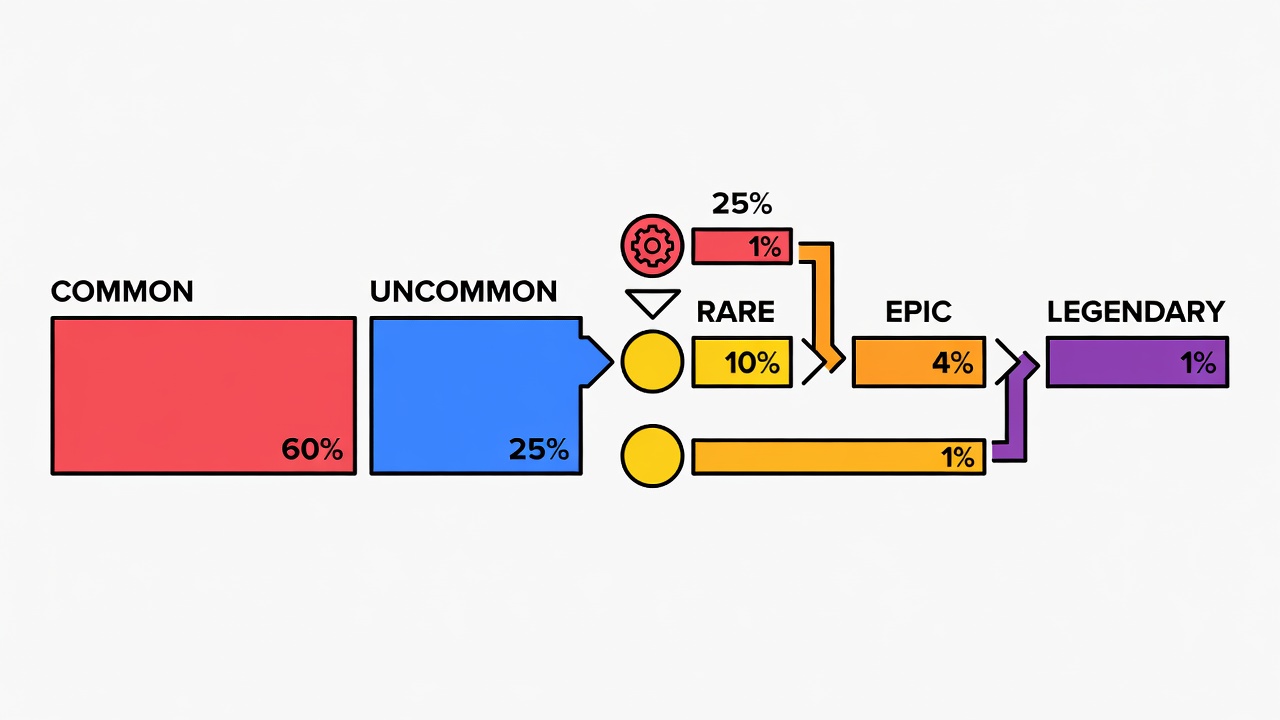
You walk into a video game. You see a chest. You click it. You pay $5. The chest opens. Inside is a random reward. It could be cosmetic garbage or a legendary weapon. You do not know until it opens. This is a loot box. And this is the mechanic that has regulators globally saying: wait, this looks like gambling.
Here is why: the psychological mechanics are identical to slot machines. You pay money. You see animation. You get a random outcome. Some outcomes are more valuable than others. The house always has an edge. The only difference is that you always get something (even if it is a duplicate item worth $0.01).
The Regulatory Question
Does a loot box constitute gambling? In most jurisdictions, the answer is technically no. Gambling requires wagering money on an outcome with a chance of losing that money entirely. A loot box guarantees an item, so you do not lose the money. You spent $5 and received an item (valuable or not).
But Belgium's gaming commission (the Commission de Controle des Jeux de Hasard) ruled in 2018 that certain loot boxes are gambling. Specifically, loot boxes that can be sold for real money on secondary markets create a gambling dynamic. You pay $5, you get a random item, you can sell it for $0.50 or $50. The uncertainty about resale value plus the ability to resell creates gambling-like mechanics.
The ruling did not ban loot boxes entirely. It banned the most egregious form: loot boxes with variable outcomes that players can resell for real money. The logic is that if the outcome has tradeable value, then gambling regulations apply.
The UK Approach
The UK Gambling Commission took a different path. In 2020, they published guidance saying that most loot boxes are not regulated gambling, but they will monitor the issue. They expressed concern about loot boxes that:
- Target minors explicitly
- Use mechanics designed to maximize spending (like countdown timers, limited-time offerings)
- Create social pressure to open more boxes ("everyone else has this item")
The Commission did not ban loot boxes but warned publishers and platform operators (Steam, Epic Games, PlayStation) that they could face scrutiny if loot boxes are designed specifically to exploit vulnerable players.
What the UK actually did was shift responsibility. Publishers cannot be regulated directly (they are not gambling operators), but platform operators (Steam, Epic Games) can impose rules. Both companies subsequently added loot box disclosure requirements: publishers must disclose the exact odds of different outcomes in loot boxes. This is similar to RTP disclosure for slots.
The German Situation
Germany treats loot boxes as a youth protection issue, not strictly as gambling. The Unterhaltungssoftware Selbstkontrolle (USK, the game rating board) warned publishers that loot boxes with real-money spending create a "gambling-adjacent" experience. The concern is primarily about children spending their parents' credit cards on unopened chests.
Germany did not ban loot boxes but required that games with loot boxes receive an age rating of 12+ or higher (instead of 6+ or 3+). This reduces the addressable market for games targeting young children. Additionally, publishers in Germany must make the odds of rare items explicit.
This is regulation through market segmentation: loot boxes are legal, but they carry a regulatory cost (higher age rating, smaller addressable market).
The US Situation (Fragmented)
The United States has no federal regulation of loot boxes. There is no FTC rule. There is no national standard. Instead, individual states have started moving. Washington State and Illinois have introduced bills to ban or heavily regulate loot boxes. The bills have not passed, but the intent is clear: loot boxes are on the regulatory radar.
The American approach is slower because the US gambling regulatory framework is state-based, and loot boxes do not fit neatly into traditional gambling definitions. A state would need to define loot boxes as gambling (which they technically are not under traditional definitions) or create new category-specific legislation. Both require political will and consumer demand for change.
The Player Spending Reality
Average spending on loot boxes in major games (Fortnite, Apex Legends, League of Legends) is approximately $80-150 per player per year among paying players. The distribution is heavily skewed: 5 percent of players spend 70 percent of the money. This heavy-tail distribution is identical to slot machine spending.
For comparison, average annual spending on online slots is approximately $200-400 per paying player. Loot box spending is approaching slot machine spending without the regulatory framework of slot machine oversight.
The Psychological Mechanic
Variable-ratio reinforcement is the reason loot boxes are psychologically potent. A player opens ten loot boxes and gets common items in nine of them. In the tenth, a rare item. The uncertainty creates anticipation. The occasional payoff creates reward pathways in the brain identical to those activated by slot machines.
Vine Varshney and researchers at the University of Alberta studied this specifically. They found that loot box mechanics (variable rewards, visual animations, sound design) activate the same neural pathways as gambling in the ventromedial prefrontal cortex.
The difference is that the player always receives something, which provides a rationalization. "I did not lose money, I got an item." But if that item is worthless (a duplicate, a cosmetic nobody uses), the outcome is functionally identical to a loss.
The Future Regulatory Path
Based on current trends, I expect:
-
More EU jurisdictions will follow Belgium's lead and classify certain loot boxes as gambling, requiring licensing and player protection standards.
-
The US will likely follow California or Washington with a state-level ban or strict regulation, which will then pressure federal action.
-
Gaming platforms will be forced to add stricter disclosure requirements (odds, spending limits, age-gating).
-
The definition of gambling will expand to include outcomes where the player receives a randomized item with variable resale or utility value.
Regulators are watching because loot boxes represent a profitable gray zone. Publishers love them because they generate $15+ billion annually. Regulators hate gray zones because they create competitive disadvantages for traditional gambling operators (who are heavily regulated) and potential harms for players (who do not understand they are participating in gambling-adjacent mechanics).
The outcome is not that loot boxes will be banned. It is that they will be regulated identically to slot machines: disclosed odds, spending limits, age restrictions. When that happens, the business model becomes less profitable and fewer games will include loot boxes. Until then, expect continued regulatory pressure and fragmented approaches across jurisdictions.