Report No. 191
Payout on Green in Roulette: 35 to 1 and the Zero's Cost
Green pays 35 to 1 on single and double zero wheels. How that price compares with 37 and 38 pockets, and how the zero sets the edge on outside bets.
The brief
Verdict: a bet on green in roulette is a straight-up bet on a single pocket, and it pays 35 to 1, the same as any number on the layout. That holds on a single zero wheel and on a double zero wheel, where 0 and 00 are each a separate 35 to 1 bet. What changes between the two wheels is not the payout but how many green pockets stand between that payout and a fair price, and green is where the casino's whole margin comes from.
The 35 to 1 figure is not a house custom. New Jersey's roulette code says no licensee may pay below the listed odds, and Pennsylvania's chapter requires certificate holders to pay at no less than the paytable. Both tables put the straight-up bet at 35 to 1, as of October 2026.
Payout on green in roulette table: what each wheel pays
On both wheel types a single green pocket pays 35 to 1; the only bet that prices the zeros differently is the First Five Numbers bet on double zero tables, at 6 to 1. The table below sets out the regulated minimums and what happens to outside bets when the ball lands on green.
| Bet or outcome | Single zero wheel | Double zero wheel |
|---|---|---|
| Straight up on 0 | 35 to 1 | 35 to 1 |
| Straight up on 00 | Not offered | 35 to 1 |
| First Five Numbers (0, 00, 1, 2, 3) | Not offered | 6 to 1 |
| Even-money bets when green hits, New Jersey | Lost | Half or all lost, casino's choice |
| Even-money bets when green hits, Pennsylvania | Lost | Lost |
The First Five Numbers line is the odd one out. It appears in the New Jersey payout odds table at 6 to 1 and in Pennsylvania's table at the same price, and it is the only listed bet that bundles both green pockets into one wager.
How does 35 to 1 compare with the true odds?
A 35 to 1 payout would be exactly fair on a wheel with no zero at all: Wikipedia's roulette article notes the formula breaks even with only 36 numbers. Every green pocket added beyond those numbers is margin for the house.
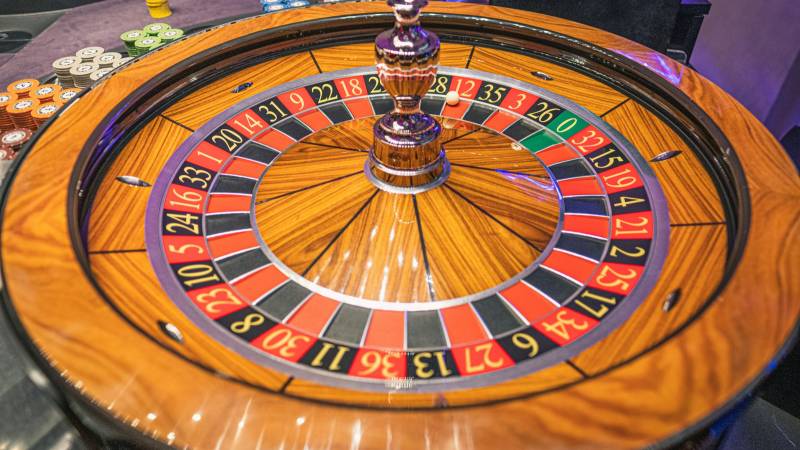
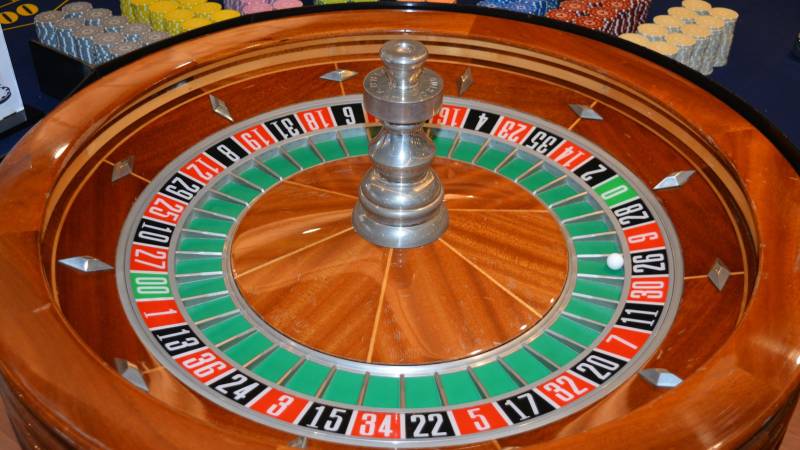
Pennsylvania's code fixes the wheel sizes. A single zero wheel must have 37 equally spaced compartments with one green zero, and a double zero wheel must have 38 equally spaced compartments with 0 and 00 both green. The payout stays at 35 to 1 on both, so the second green pocket on the American layout is pure cost to the player.
Worked through, that cost is measurable. On a double zero wheel the straight-up bet has an expected value of minus 5.26%, and on a single zero wheel the figure is 2.70%. Readers comparing the layouts pocket by pocket will find the order and arcs in our reports on the double zero roulette wheel and the European roulette wheel layout.
Why does green set the house edge on every other bet?
Green is the reason outside bets lose money over time: when the ball lands on a zero, red, black, odd, even and the two halves of the board all fail to win, and the exact penalty depends on the state and the wheel.
On a single zero wheel, New Jersey's rule is plain: even-money outside wagers are lost when 0 comes up. On a double zero wheel the same code gives the casino a choice. When 0 or 00 hits, a player loses half or the entire wager, at the licensee's option. That makes the posted table rules part of the price: a double zero table that takes only half of each even-money bet on green is charging less for the zeros than one that takes the lot.
Pennsylvania offers no half-loss option. Under its chapter, a zero loses every even-money outside bet outright, on either wheel. The same chapter carries a rule worth knowing: a double zero wheel may be operated as a single zero game, and if the ball then lands in 00 the dealer must declare the spin void and respin instead of collecting. For a full run through the rest of the layout, our roulette rules and odds hub collects the reports by bet type.
Is a bet on green better than a bet on a number?
No. A green pocket is one compartment among 37 or 38, paid at the same 35 to 1 as any numbered pocket, so it carries the same odds and the same house edge as any single number on that wheel. The decision that moves the edge is the wheel: a single zero table, or a double zero table run under the single zero respin rule, puts one green pocket against the player instead of two.
Common questions
How much does a winning bet on green pay?
A straight-up chip on 0, or on 00 at a double zero table, is paid at 35 to 1: thirty-five units of winnings for each unit staked, with the original chip returned. New Jersey and Pennsylvania both treat 35 to 1 as the floor, not a ceiling.
Is green the luckiest number on the wheel?
No. Each green pocket is one compartment of the same size as every numbered one, and it is paid at the same 35 to 1. Its odds and its house edge match any other single number on that wheel.
Is roulette pure luck?
Each spin is random, but the price of every bet is fixed by the rules before the ball drops. The house edge comes from the green pockets, so the choice of wheel and the zero rule on outside bets matter more than the choice of number.
Can a casino pay less than 35 to 1 on green?
Not in New Jersey or Pennsylvania. Both state codes set their payout tables as minimums, so a table may pay more on a straight-up win but never less, as of October 2026.
Documents we read
- New Jersey Division of Gaming Enforcement (via Cornell LII), N.J. Admin. Code 13:69F-5.2 Roulette: payout odds, accessed October 2026
- Pennsylvania Gaming Control Board (Pennsylvania Code), 58 Pa. Code Chapter 617a. Roulette, accessed October 2026
- Wikipedia, Roulette, accessed October 2026