The Setup: May 2004
The Ritz Casino in London, the high-limit roulette room. Three players: a Serbian physicist, a Hungarian engineer, and a Hungarian mathematics graduate. Their goal: exploit a roulette wheel using hidden technology.
The roulette wheel, identified as wheel number 4 in the Ritz's high-limit room, had been in use for an extended period. Over time, mechanical wear had made certain pockets slightly larger and slightly smaller. This bias was minute but measurable.
The three knew this. The Ritz did not.
The Technology
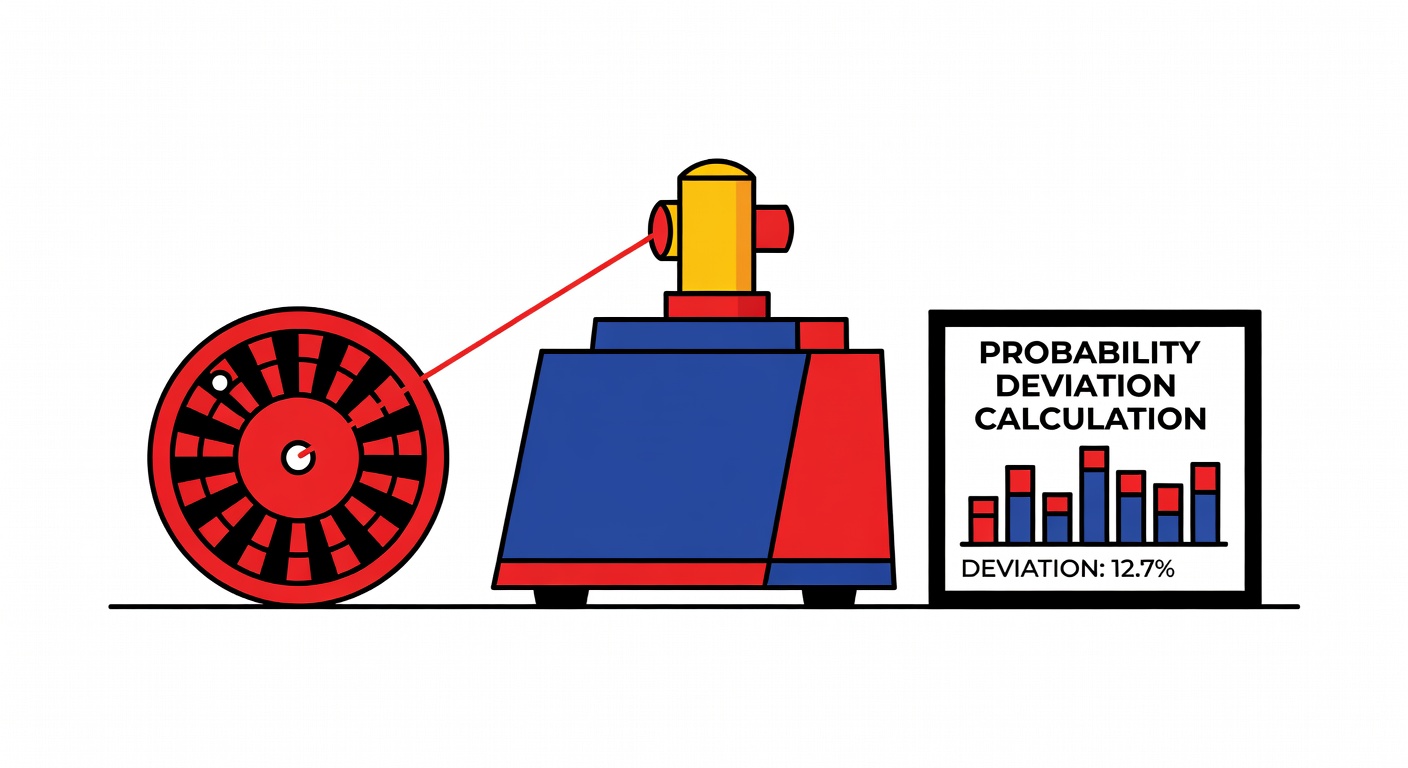
Each player wore a shoe modified to contain a laser scanner. The scanner measured the wheel's rotation speed. The scanner also measured the ball's initial velocity. The technology was not visible to casino staff.
The measurements were sent via wireless transmission to a computer worn under one of the players' clothing. The computer calculated the likely landing zone for the ball based on the physics of the wheel and the ball.
The calculation took approximately 5 seconds. The result was transmitted to an earpiece worn by the player placing the bets. The player then placed their bets in the zone identified by the calculation.
This entire sequence occurred while the roulette wheel was spinning and the dealer was announcing "No more bets."
In reality, the bets were being placed after information the casino should have had (or should have prevented), but before the outcome was determined.
The Results
Night one: they won 865,000 pounds. Night two: they won an additional 1,435,000 pounds for a total of 2,300,000 pounds across two nights.
The Ritz became suspicious only when the wins exceeded the expected variance by such a degree that the probability of luck was near zero.
The Ritz contacted the Metropolitan Police. The police arrested all three players before they could leave the casino.
The Legal Question
The Ritz charged them with fraud and cheating. The case hinged on a specific legal question: had the players used technology to interfere with the roulette wheel itself, or had they simply measured information the wheel was providing?
The wheel was not hacked. The wheel was not manipulated. The wheel's mechanics were unchanged. The players had not touched the machine. They had only measured its behavior and predicted the outcome.
The prosecution argued this was cheating. The defense argued that measuring publicly available information (the wheel's rotation, the ball's velocity) was not cheating. The measurements were made before the final spin, but after the wheel was in motion.
It was not manipulation. It was measurement.
The Verdict
The judge ruled in favor of the defendants. The players walked free. They kept the 1.3 million pounds from the night before police intervention (the police had recovered the rest).
The reasoning was specific: under English law at that time, using an external measuring device to predict outcomes was not illegal. The players had not interfered with the mechanism. They had not colluded with casino staff. They had not violated any clearly written rule.
The Ritz appealed. The appeal was dismissed.
The legal landscape changed immediately after. Parliament closed the loophole. Under the Gaming Act 2005, using technology to predict roulette outcomes became explicitly illegal.
Why This Mattered
Before 2004, casinos assumed their wheels were unpredictable. They were wrong. Physical systems are predictable if you have sufficient information about initial conditions.
The case demonstrated that a roulette wheel is a mechanical system governed by physics. If you measure the initial conditions with sufficient precision, you can predict the outcome.
Casinos responded by:
- Replacing all worn wheels with newly manufactured equipment
- Increasing wheel maintenance frequency to prevent bias
- Shortening the betting window (no bets allowed after the wheel reaches a certain speed)
- Installing technology that detects external devices in the gaming area
By 2010, the vulnerabilities that allowed the 2004 case were sealed.
The Aftermath
The three players' names were publicized in the UK press. The Serbian physicist returned to academia. The Hungarian engineer and mathematician dropped from public view.
The Ritz Casino itself closed in 2008 due to a different bankruptcy. The players' win had nothing to do with the closure, but the story was tied to the property's eventual demise.
Why This Remains Significant
The case proves that roulette wheels are not random sources. They are mechanical devices. Mechanical devices can be understood and predicted.
The players did not have a magic system. They had precision measurement and physics. They exploited a gap between what casinos thought was impossible and what was actually possible.
The law changed to prevent this specific approach. But the underlying principle remains true: if you can measure initial conditions, you can predict mechanical outcomes.
The Ritz case is the only documented example of successfully defeating a casino roulette wheel through legitimate (at the time) scientific means. It happened once in 2004. It has not happened since in a major casino, partly because the legal framework changed, partly because casino security improved, and partly because the specific vulnerabilities were patched.
But the fact that it happened once proves that the house's absolute dominance is not guaranteed by the laws of physics. It is guaranteed by the laws of the land and the security measures casinos put in place.
Without those defenses, the game is not as random as people assume.